







 09Apr
09Apr
The Challenge of Staying Cool While Working from Home
Let’s be honest: working from home in the Philippines is a constant battle against the heat. You’re on a crucial video call, and you can feel a bead of sweat tracing a path down your temple. Your focus drifts, not to the spreadsheet on your screen, but to the stifling air in your room. In 2025, as remote work remains a fixture of our lives, the question is no longer *if* you need a personal cooling device, but *which one* is the smart choice for your desk.
Two contenders have emerged for the desktop throne: the sleek, high-velocity small turbo fan and the promising desk air cooler. They both claim to be the ultimate solution for personal comfort, but in a climate where humidity is as much an enemy as the heat itself, one of these devices is a clear winner for most Filipino WFH warriors. This guide will help you figure out which one.
The Reality: When Heat Kills Your Productivity
The “heat index” isn’t just a term you hear on the evening news; it’s a daily reality that directly impacts your ability to perform. With PAGASA continually reporting rising temperatures year after year, the typical Filipino home office can easily enter the “danger” zone of heat and humidity. This isn’t just about discomfort; it’s about a measurable drop in cognitive function.
That feeling of sluggishness and “brain fog” by 2 PM? The oppressive heat is a likely culprit. Running your main air conditioner for eight to ten hours a day is a fast track to a shocking Meralco bill, a luxury many of us simply cannot afford. This economic reality has fueled the incredible rise of personal, desktop-sized cooling solutions.
The Desktop Contenders: Airflow vs. Actual Cooling
This is where our two main players enter the ring. They represent two fundamentally different approaches to making you feel cool.
1. The Small Turbo Fan: Power in Simplicity
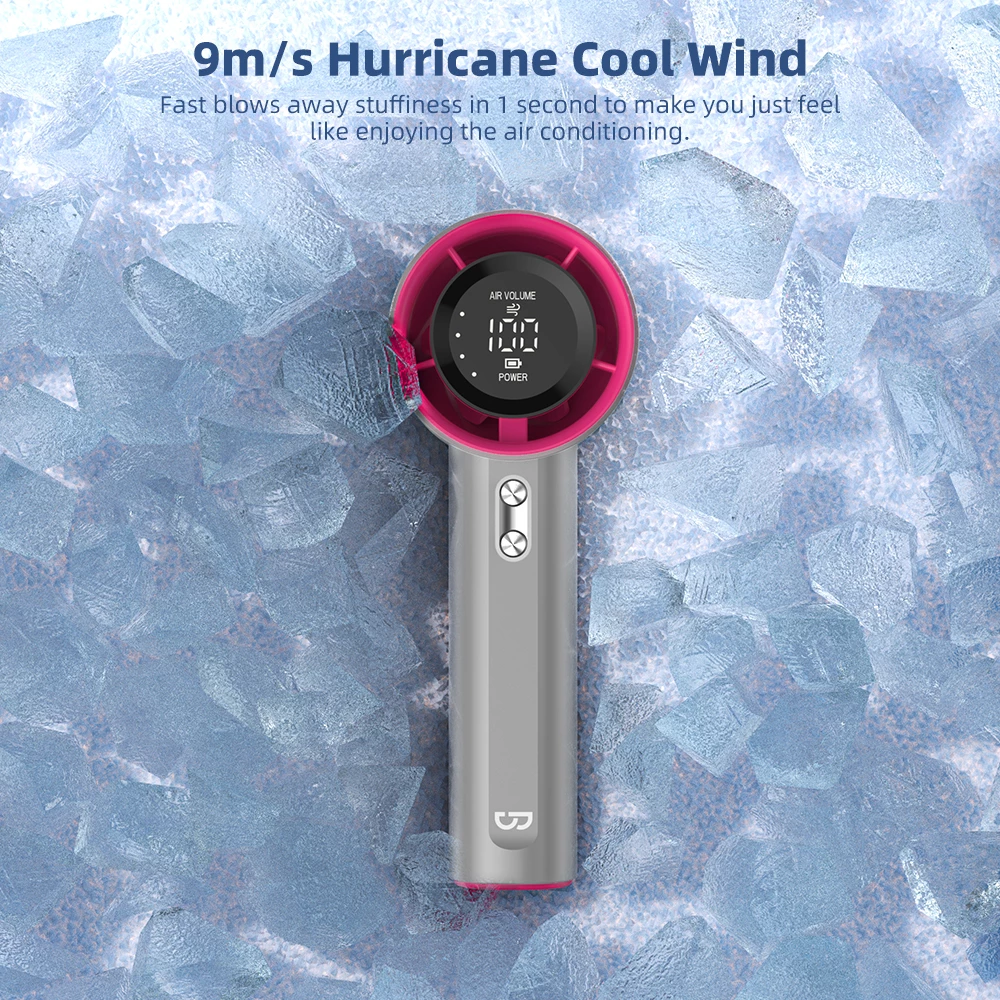
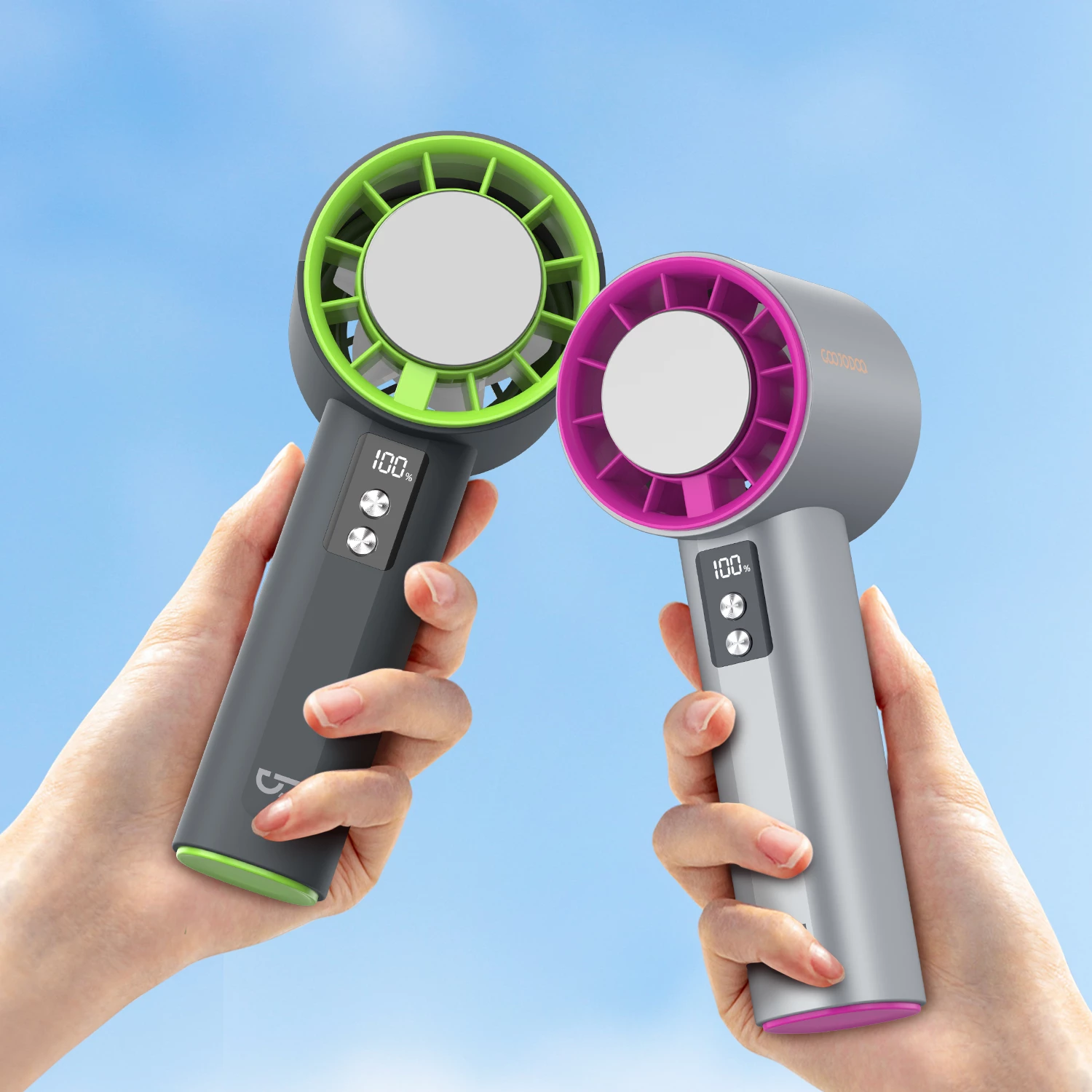
Imagine a concentrated, powerful jet of air, precisely where you need it. That’s the promise of the small turbo fan. It doesn’t try to change the room’s temperature. Instead, it uses advanced aerodynamics to create a strong wind-chill effect, making you feel instantly cooler by accelerating the evaporation of sweat from your skin.
2. The Desk Air Cooler: A Personal Climate Changer?
The desk air cooler, often called a personal evaporative cooler, takes a more ambitious approach. It uses water and a fan to genuinely lower the temperature of the air it blows out. The allure is undeniable: the promise of a personal bubble of chilled, misty air right at your workspace.
Finding Your Champion for a Cooler 2025
So, which device is the better investment for your money, your comfort, and your productivity? The answer depends almost entirely on one critical, often overlooked factor: the Philippines’ signature humidity.
This article will break down the science, the practicality, and the real-world performance of both the small turbo fan and the desk air cooler specifically for our tropical climate. We’ll compare them on cooling effectiveness, energy consumption, maintenance, and how they perform when the air is already thick with moisture. By the end, you’ll know exactly which device deserves a spot on your desk to help you conquer the heat and stay productive all year round.

Understanding the Small Turbo Fan: Power in a Petite Package
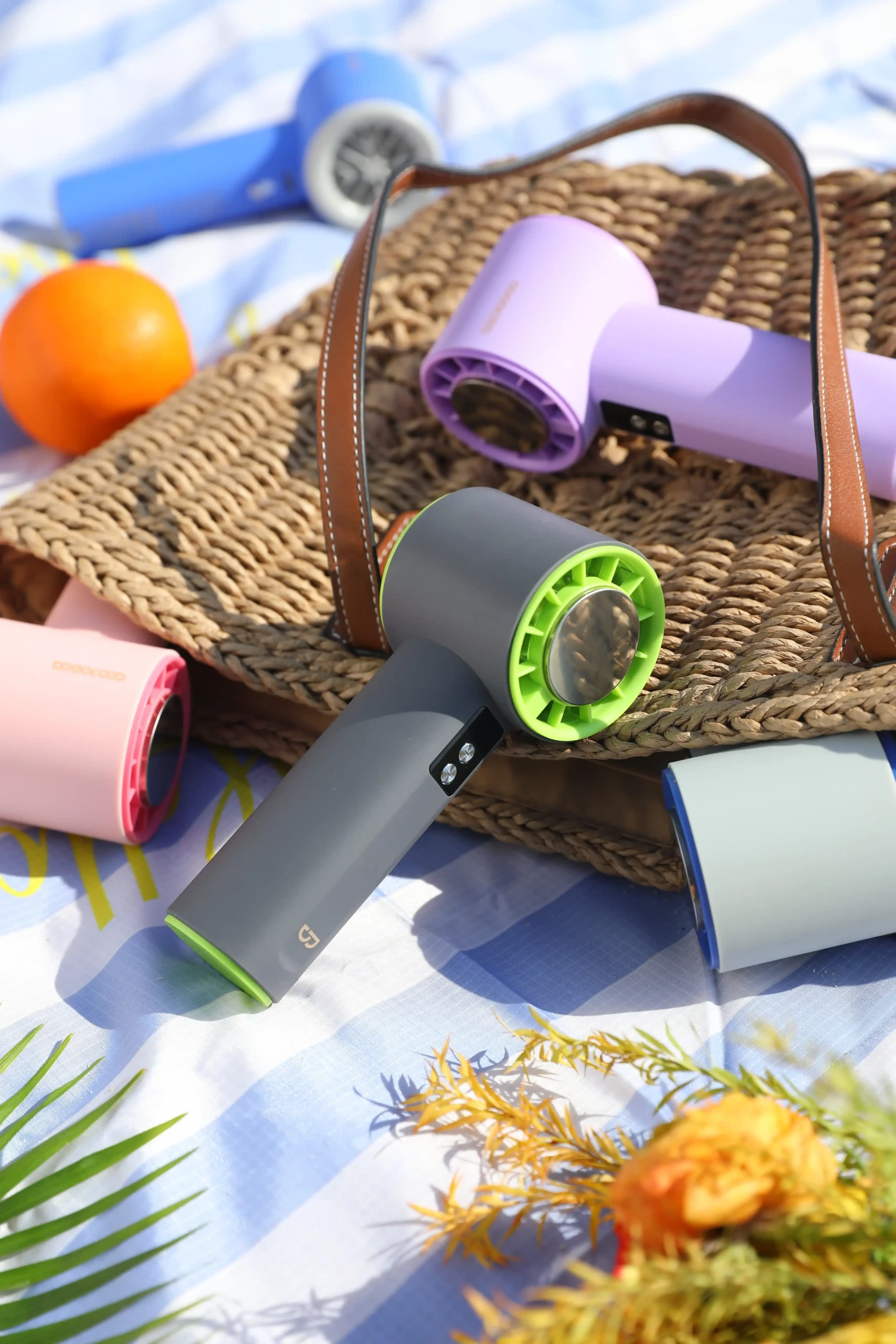
Let’s get one thing straight: the small turbo fan is not the clunky, oscillating “electric fan” you grew up with. Think of it less as a simple fan and more as a personal air circulator. It’s a modern piece of engineering designed for one primary purpose: to move a concentrated, high-velocity stream of air exactly where you need it.
At its heart is a powerful, high-speed motor, often a modern brushless DC type, paired with uniquely designed blades. These aren’t just flat paddles; they’re often deep-pitched and aerodynamically sculpted to create a tight vortex of air. This design allows it to project a powerful jet of air across a room, creating a noticeable breeze even from several meters away, a feat most regular desk fans can’t match.
How It Actually Cools You: The Wind-Chill Deception
Here’s the most critical point to understand: a small turbo fan does not lower the actual temperature of the air in your room. It doesn’t have any refrigerant or water-based cooling mechanism. So, how does it make you feel so much cooler?
The magic is in the powerful “wind-chill effect.” Your body naturally cools itself by perspiring. The turbo fan’s high-velocity airflow dramatically accelerates the evaporation of that moisture from your skin. This process draws heat away from your body, making you feel significantly cooler, even if the thermometer on the wall hasn’t budged a single degree. It’s the same reason a strong gust of wind feels so refreshing on a humid afternoon in Manila.
For your WFH setup, this is a game-changer. It creates a personal cooling zone around your desk, providing immediate relief from that sticky, stagnant air without the high cost of cooling the entire space.
Key Characteristics That Matter in a Filipino Home
Beyond its core function, the specific features of small turbo fans make them particularly well-suited for our work-from-home life in the Philippines in 2025.
Compact and Minimalist by Design
Real estate on a desk is precious. These fans are built with that in mind. Their small footprint means they can sit unobtrusively in a corner, leaving you plenty of room for your monitor, keyboard, and indispensable cup of coffee. The aesthetic is typically sleek and modern, designed to blend into a contemporary workspace rather than being an eyesore.
The Energy Efficiency Advantage
With Meralco bills being a constant concern, energy consumption is a major deciding factor. This is where the turbo fan truly shines. Thanks to its efficient brushless DC motor, many models operate on incredibly low power.
- Low Wattage: We’re talking about a power draw that can be as low as 5 to 25 watts, depending on the speed setting.
- Real-World Savings: To put that in perspective, it’s often less power than a single energy-saving light bulb. You could run it for your entire 8-hour workday, every day, and barely notice the impact on your monthly electricity bill. This is a stark contrast to more power-hungry cooling solutions.
Instant, Directional Airflow
When the midday heat hits and you start feeling drowsy, you need relief now, not in five minutes. A turbo fan delivers instantly. The moment you switch it on, you feel its powerful stream of air.
Furthermore, that stream is highly directional. You can aim it precisely at your face or torso for maximum cooling effect without creating a chaotic whirlwind that sends papers flying across your desk. This focused approach means more effective personal cooling and less disruption to your workspace.

Demystifying the Desk Air Cooler: Your Personal Evaporative System
At first glance, a desk air cooler looks like a futuristic, high-tech fan. It’s compact, often boasts a sleek design, and makes a promise that a regular fan simply can’t: to blow genuinely colder air. But it’s crucial to understand this is not a miniature air conditioner. Instead, it’s a clever device that harnesses one of nature’s oldest cooling tricks to create a personal cool zone right on your desk.
In essence, a desk air cooler is a personal evaporative cooler. It’s a self-contained system designed to cool the air in your immediate personal space by using the simple, yet effective, process of water evaporation.
How Does It Actually Cool the Air?
So, what’s the magic behind that cool, misty breeze? It isn’t a complex chemical process involving Freon or a power-hungry compressor like in an aircon. The mechanism is surprisingly straightforward and relies on three key components working in perfect harmony.
- The Water Tank: This is the small, removable reservoir you fill with water. For an extra boost of cold, most users opt for chilled water, and some models even include a small compartment for ice cubes.
- The Absorbent Medium: Tucked inside the unit is a special wicking filter or pad, often made of a fibrous, sponge-like material. This medium’s job is to soak up water from the tank, becoming fully saturated.
- The Fan: This part works just like a regular fan, drawing in the warm ambient air from your room. The key difference is that instead of just blowing that same warm air back at you, it forces it directly *through* the water-soaked filter.
As the stream of warm air passes over the vast, wet surface area of the filter, the water molecules on it evaporate. This physical change from liquid water to water vapor requires energy, and it draws that energy in the form of heat directly from the air. The result? The air that emerges from the other side is a few degrees cooler and, importantly, more humid.
The Science of Evaporative Cooling in the Philippine Context
Think about that incredibly refreshing feeling when you step out of a swimming pool or the ocean at a resort in Palawan on a breezy day. As the wind blows across your skin, the water evaporates, pulling heat away from your body and making you feel instantly cooler, even if the sun is blazing. A desk air cooler replicates this exact natural phenomenon on a small, controlled scale.
However, and this is the most critical point for anyone in the Philippines, there’s a huge catch. The entire process of evaporative cooling is heavily dependent on the surrounding air’s humidity. It works best in very dry climates—think of desert environments like Dubai or Arizona—where the air is “thirsty” and can easily absorb a lot of moisture. In those conditions, water evaporates rapidly, leading to a significant and very noticeable temperature drop.
Here in our tropical archipelago, the situation is the complete opposite. The air is already heavily saturated with moisture. With relative humidity levels frequently tracked by PAGASA to be between 70% and 90%, our air is simply not “thirsty.” Because it can’t hold much more water vapor, the rate of evaporation from the cooler’s filter slows down dramatically. This severely reduces the device’s cooling effectiveness. During the peak of the rainy season or in consistently humid coastal cities, you may find it adds more clamminess to the air than genuine cooling comfort.
Key Characteristics You Must Consider
Now that we understand the ‘how’ and the critical ‘why,’ let’s break down the practical characteristics and real-world implications of using a desk air cooler for your WFH setup in 2025.
1. Active Air Cooling (With a Major Caveat)
Unlike a small turbo fan that only circulates air to create a wind-chill effect, a desk cooler does actively lower the temperature of the air it blows out. This drop can be a tangible 2 to 5 degrees Celsius right in front of the unit. It provides a genuinely cool, sometimes misty sensation that can feel incredibly pleasant on a scorching afternoon. But always remember the caveat: its cooling power is directly and inversely proportional to your room’s ambient humidity. The more humid the day, the less cooling you’ll get.
2. It’s a Part-Time Humidifier
By its very nature, an evaporative cooler adds moisture to the air. This isn’t always a bad thing. If you work in a sealed, fiercely air-conditioned room, the air can become uncomfortably dry. In that specific scenario, the gentle moisture from a desk cooler can be a welcome benefit, helping to combat dry skin, irritated sinuses, and static electricity.
However, in a typical, non-airconditioned room in Metro Manila, adding more humidity to the already muggy air can be counterproductive. It can make the air feel heavier and stickier, potentially contributing to that uncomfortable, stuffy “kulob” feeling we all know and dislike.
3. A Serious Maintenance Commitment is Required
This is not a simple “plug-and-play” appliance like a fan. To keep it running effectively and, more importantly, hygienically, you must commit to a consistent maintenance routine. This is non-negotiable.
- Daily Water Refills: The small water tanks in these compact units will need to be refilled, sometimes several times throughout a workday. Using clean, preferably filtered, water can help reduce mineral buildup over time.
- Weekly Cleaning: The water tank and the area around the filter are constantly damp, creating a perfect breeding ground for mold, mildew, and bacteria. The tank must be emptied and cleaned with soap and water at least once a week to prevent this.
- Filter Care and Replacement: The absorbent filter is the heart of the unit. It needs to be checked regularly for any signs of mildew and cleaned according to the manufacturer’s instructions. Eventually, it will clog with mineral deposits (from tap water) or simply degrade, requiring a complete replacement to maintain performance.
Neglecting the maintenance of a desk air cooler is a serious issue in our climate. It won’t just reduce its cooling ability; it could lead to the device blowing musty odors and potentially harmful mold spores directly into your breathing space, which is a significant health concern.

Head-to-Head Comparison: The Key Factors for Filipinos
When you’re trying to decide between a small turbo fan and a desk air cooler, the marketing can be confusing. They both promise to keep you cool at your desk. But for those of us working from home in the Philippines, the reality of our tropical climate changes the game entirely. Let’s break down the critical factors that truly matter, so you can make a choice that you won’t regret when the midday heat hits in May.
Cooling Effectiveness: The Feel vs. The Reality
The most important question is: which one cools you down better? The answer is complicated because they achieve “cool” in fundamentally different ways. This isn’t about which one is stronger, but which type of cooling suits you and our environment.
The Small Turbo Fan: Master of the Wind-Chill Effect
A small turbo fan does not lower the temperature of the room. Let’s be clear about that. Its genius lies in creating a concentrated, high-velocity stream of air. When this powerful jet of air hits your skin, it rapidly accelerates the evaporation of sweat. This process, known as the wind-chill effect, is what makes you feel significantly cooler and more refreshed.
Think about standing by the beach in Batangas on a hot but windy day. The air temperature is high, but the constant sea breeze makes it feel pleasant and bearable. That’s precisely the principle a turbo fan brings to your desk. It provides immediate, directional relief that cuts through the stagnant, humid air of a closed room.
- Sensation: A powerful, refreshing breeze.
- Best for: People who want to feel immediate, strong airflow and the sensation of a constant wind.
The Desk Air Cooler: A Micro-Climate Creator
A desk air cooler, or evaporative cooler, works differently. It genuinely lowers the temperature of the air it blows out, but usually only by a few degrees. It does this by pulling in warm air and passing it through a water-soaked filter. As the water evaporates, it absorbs heat, resulting in a cooler, slightly moist puff of air.
The feeling is less of a powerful wind and more of a gentle, cool, and slightly misty cloud. It’s like the refreshing mist you feel when standing near a waterfall. It’s pleasant, but its effective range is very small, typically limited to the one or two feet directly in front of the device.
- Sensation: A gentle, misty, and slightly colder airflow.
- Best for: Those who prefer a subtle drop in temperature over a strong wind and don’t mind a bit of added humidity.
Performance in High Humidity: The Absolute Deal-Breaker
If there is one single factor that should settle this debate for anyone living in the Philippines, this is it. Our country’s defining climatic feature isn’t just heat; it’s the relentless, year-round humidity.
Why Humidity Cripples Desk Air Coolers
Remember how desk air coolers work? They rely on water evaporation. But here’s the scientific catch: evaporation can only happen efficiently if the surrounding air isn’t already saturated with water vapor. In the Philippines, the relative humidity often sits between 75% and 90%.
When the air is already that full of moisture, the water on the cooler’s filter pad has nowhere to go. Evaporation slows to a crawl, and as a result, the cooling effect becomes negligible. On a particularly humid day, which is most days in Metro Manila or Cebu, a desk air cooler will do very little cooling. Worse, it will continue to pump moisture into already damp air, making your workspace feel even more sticky, stuffy, and uncomfortable—the exact opposite of what you want.
The Turbo Fan’s Unbeatable Advantage
A small turbo fan, on the other hand, couldn’t care less about humidity. Its effectiveness is based on air movement, not evaporation. A strong blast of air will help sweat evaporate from your skin regardless of whether the ambient humidity is 50% or 95%. Its performance is consistent and reliable, day in and day out, from the dry heat of April to the muggy downpours of August.
For the Philippine context, this is a non-negotiable win for the turbo fan. It simply works when the alternative fails.
Energy Consumption: The Meralco Bill Test
In 2025, with electricity rates being a constant concern for every household, the operational cost of any new appliance is a major consideration. An hour of comfort shouldn’t lead to a month of budget worries when your Meralco bill arrives.
The Lean Machine: The Turbo Fan
Small turbo fans are champions of energy efficiency. Many modern models use brushless DC motors, which are engineered for high performance with minimal power draw. A typical small turbo fan might consume anywhere from a mere 5 watts on its lowest setting to about 25 watts on its highest. It’s an incredibly lean appliance, designed to do one thing—move air—and do it without wasting energy.
The Thirstier Cooler: The Desk Air Cooler
A desk air cooler has more components to power. It has a fan, but it also has a small water pump to circulate water and saturate the cooling pad. This dual-system operation inherently requires more electricity. While still not as power-hungry as an air conditioner, a desk air cooler can easily consume between 30 to 60 watts, or sometimes more. Over an 8-hour workday, five days a week, this difference adds up significantly on your monthly bill.
When you consider that the turbo fan not only performs more reliably in our climate but also costs less to run, the choice becomes even clearer from a financial standpoint.
Maintenance: The Unseen Chore You’re Signing Up For
The initial purchase is just the beginning. The long-term ownership experience is heavily defined by the maintenance required. This is another area where the two devices are worlds apart.
Small Turbo Fan: The “Set and Forget” Option
Maintaining a turbo fan is incredibly straightforward. Every few weeks, you unplug it and wipe the dust off the grilles and blades. That’s it. There are no tanks to fill, no filters to clean, and no risk of mold or mildew. It’s a low-effort device perfect for a busy WFH professional.
Desk Air Cooler: A Demanding Pet
Owning a desk air cooler is a commitment. It requires a routine of care that, if neglected in our tropical climate, can lead to unpleasant or even unhealthy consequences.
- Constant Water Refills: The small water tank will need to be refilled frequently, often several times during a single hot workday.
- Preventing Slime and Bacteria: Stagnant water in a warm environment is the perfect breeding ground for bacteria and slime. The water tank must be emptied and cleaned with soap every couple of days to prevent this buildup.
- The Moldy Filter Problem: The absorbent filter or cooling pad is constantly damp. In a humid room, it can easily start to grow mold and mildew, which will then be blown directly into your face. This can trigger allergies and respiratory issues. The filter needs to be regularly removed, washed, and eventually replaced.
This “maintenance tax” is a significant drawback. A device meant to provide comfort shouldn’t become another source of chores and health worries.
Noise Level: What Kind of Sound Can You Tolerate?
Finally, let’s talk about noise. Neither of these devices is perfectly silent, especially at higher speed settings. The important difference isn’t just the volume (decibels), but the character of the sound they produce.
The Turbo Fan’s Whir
A small turbo fan produces a steady, consistent whirring or humming sound. The noise comes from the high-speed motor and the blades cutting through the air. For many people, this consistent, high-pitched sound blends into the background and becomes effective “white noise,” which can actually help with focus by drowning out other distracting sounds.
The Air Cooler’s Medley
A desk air cooler produces a more complex sound profile. You get the sound of the fan, which is similar to a regular fan, but it’s accompanied by the sound of water. You might hear a gentle trickling, gurgling, or bubbling as the pump circulates water to the filter pad. Some people might find this sound soothing, like a miniature water feature. Others may find the inconsistent water noises distracting during a conference call or deep work session.
There’s no objective winner here. The “better” option depends entirely on your personal tolerance and preference for different types of ambient sound in your workspace.
Which is Right for Your WFH Setup? A Scenario-Based Guide
Making the right choice isn’t about picking the “best” device overall; it’s about picking the best device for *you*. Your specific location, your personal preferences, and even your tolerance for daily chores will determine your winner. Let’s break down the scenarios to help you find your perfect desk partner for battling the tropical heat.
We’ll look at this as a simple checklist. If you find yourself nodding in agreement with the points under a certain category, you’ve likely found your answer.
The Case for the Small Turbo Fan: Your Best Bet for High Humidity
For the vast majority of Filipinos working from home, the small turbo fan is the most practical, efficient, and logical choice. Its technology is perfectly suited to our climate’s biggest challenge: relentless humidity. It doesn’t fight the humidity; it works with your body’s natural cooling mechanism to make it bearable.
You should choose a small turbo fan if…
You Live in a Typically Humid Area
Let’s be honest, this describes most of the Philippines. If you’re working from a condo in Metro Manila, a house in Cebu, or anywhere near the coast, you’re living in a high-humidity zone. Throughout the year, whether it’s the dry heat of summer or the sticky air of the *habagat* season, the moisture in the air is your real enemy.
In these conditions, an evaporative cooler struggles immensely. A small turbo fan, however, is completely unfazed. Its job is to move air, and it does that job exceptionally well regardless of whether the air is 80% or 90% saturated with moisture. It cuts through that thick, stagnant feeling and provides immediate relief.
Your Main Goal is Powerful Air Circulation
Do you crave that feeling of a strong, consistent breeze? Is your primary measure of “cool” the sensation of air moving across your skin? If so, the small turbo fan is your champion. It’s designed to create a concentrated jet stream of air that you can feel from several feet away.
This powerful airflow is a game-changer for productivity. It accelerates the evaporation of sweat from your skin, which is your body’s primary way of cooling down. This “wind-chill effect” can make a 30°C room feel several degrees cooler, instantly making you feel more alert and less sluggish without actually changing the room’s temperature.
Low Energy Bills and Minimal Maintenance Are Priorities
In 2025, every peso on the Meralco bill counts. Small turbo fans, especially models with modern brushless DC motors, are incredibly energy-efficient. You can run one for an entire 8-hour workday for a literal pittance, making it a guilt-free way to stay comfortable. It’s a tiny investment on your electricity bill for a huge return in personal comfort.
Furthermore, life is complicated enough without adding another chore to your list. The maintenance for a turbo fan is virtually nonexistent. A quick wipe-down with a cloth every few weeks to remove dust from the blades is all it takes. There are no water tanks to refill, no filters to scrub, and no risk of growing mold or mildew.
You Want a Simple “Plug-and-Play” Solution
Your focus should be on your work, not on managing your cooling device. The beauty of the small turbo fan lies in its simplicity. You take it out of the box, place it on your desk, plug it in, and turn it on. That’s it. You get immediate relief without any setup or ongoing tasks. It’s the definition of a hassle-free solution for the busy WFH professional.
When a Desk Air Cooler Makes Sense: A Niche But Necessary Choice
While the turbo fan is the workhorse for most, the desk air cooler has its specific place. It fails in high humidity, but in the right environment, it offers a type of cooling that some people genuinely prefer. Think of it not as an all-around solution, but as a specialist tool for a particular job.
You should choose a desk air cooler if…
You Live in a Drier Microclimate or Use it with an Air Conditioner
Are you one of the lucky few living in a less humid part of the country, like the highlands of Baguio or Bukidnon? In these areas, where the air is naturally drier, an evaporative desk cooler can actually work as intended, providing a noticeable drop in temperature.
A more common and effective use case, however, is as a supplement to a full-room air conditioner. Your AC’s primary job, besides cooling, is to dehumidify the room. Once the AC has created a dry indoor environment, the desk air cooler can thrive. It can provide a personal zone of extra-cool, slightly humidified air right at your desk, allowing you to set the main AC to a higher, more energy-saving temperature.
You Prefer a Gentle, Cool Mist Over a Strong Wind
Not everyone enjoys a constant, powerful breeze. For some, it can be distracting or lead to dry eyes and skin. The desk air cooler offers a fundamentally different experience. It doesn’t blast air; it exhales a gentle, misty, and subtly chilled breeze.
If your idea of comfort is a soft, cool caress of air that feels like a faint mist from a waterfall, then the sensory experience of a desk air cooler might be more appealing to you. It’s less about the force of the wind and more about the quality and temperature of the air itself.
You Don’t Mind the Maintenance Routine
This is the most critical deciding factor. Owning a desk air cooler requires a commitment. It’s not a “set and forget” device. You must be prepared to integrate its needs into your daily and weekly routine.
This includes refilling the water tank at least once or twice during your workday. More importantly, it involves a weekly cleaning ritual. You’ll need to empty and thoroughly clean the water tank and the absorbent filter to prevent the growth of *lumot* (algae), mold, and bacteria, which can be harmful when dispersed into the air you breathe. If you find this kind of maintenance therapeutic or, at the very least, not a burden, then a desk air cooler can be a viable option.
The Verdict for Your Desk in the Tropics: Making the Smart Choice
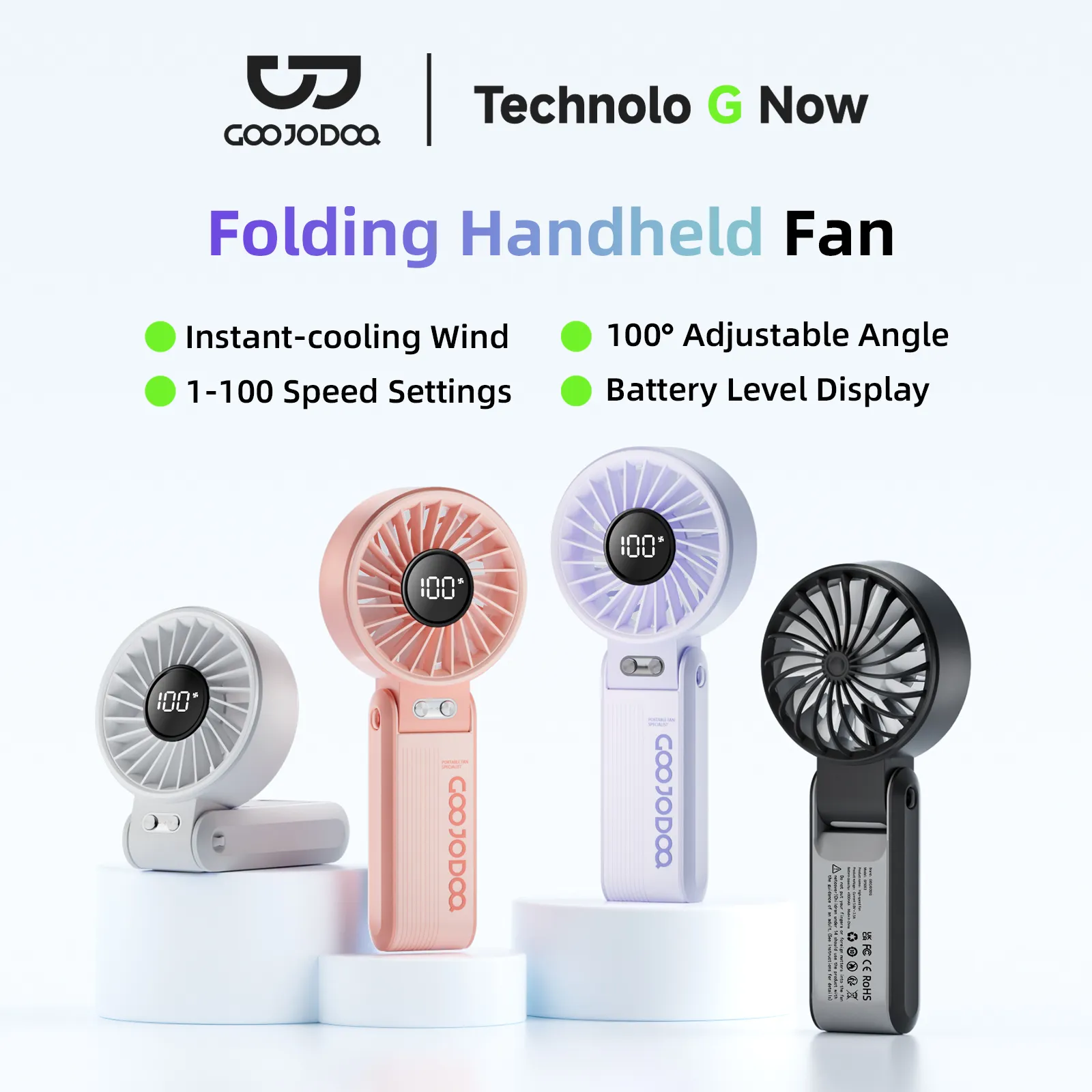
So, after breaking down the technology, the performance, and the practicalities, which personal cooling device should earn a spot on your WFH desk in the Philippines? For the vast majority of us battling the year-round tropical heat, the small turbo fan emerges as the more sensible, reliable, and effective solution.
This isn’t to say the desk air cooler is a bad product; it’s simply a tool designed for a different climate. Let’s get straight to why one is a clear winner for our specific environment.
It’s Not About “Better,” It’s About “Right for the Philippines”
The choice between a small turbo fan and a desk air cooler isn’t a simple contest of which one is technologically superior. Instead, it’s a question of environmental suitability. Your personal comfort and productivity hinge on selecting the device that works *with* our climate, not against it.
Both aim to make you feel cooler, but they take fundamentally different paths. One masters the art of air circulation, while the other attempts to alter the air itself. In a country where the air is already heavy with moisture, this difference is everything.
Why the Turbo Fan Wins in the Battle Against Humidity
The single most critical factor in this comparison is the Philippines’ high relative humidity. This is where the desk air cooler, despite its promising name, falters significantly.
The Science of “Malagkit” (That Sticky Feeling)
Desk air coolers work through evaporative cooling. They blow air over a wet pad, and as the water evaporates, it cools the air. This process is highly effective in dry climates like Arizona or parts of the Middle East. However, in Metro Manila, Cebu, or Davao, where humidity levels in 2025 regularly hover between 75% and 90%, the air is already nearly saturated with water vapor.
Think of it like trying to dry a wet towel in a sauna. The surrounding air simply can’t absorb much more moisture. Consequently, the evaporative process slows to a crawl, and the cooling effect becomes minimal to non-existent. Worse, it adds even more moisture to your immediate environment, which can amplify that uncomfortable, sticky feeling we all know as “malagkit.”
The Power of the Wind-Chill Effect
The small turbo fan, in stark contrast, is completely unfazed by humidity. Its goal isn’t to change the air’s temperature but to move it with force and precision. It creates a powerful, concentrated jet of air that accelerates the evaporation of sweat from your skin—your body’s natural cooling mechanism.
This creates a potent “wind-chill effect,” making you feel significantly cooler even if the room’s actual temperature hasn’t changed by a single degree. It cuts through stagnant, humid air, providing instant relief and preventing that sluggish, drowsy feeling that often accompanies a hot afternoon.
Your Final Checklist Before You Click “Buy”
There is no universal best choice, only the best choice for your specific situation. Before making a final decision, ask yourself these crucial questions. Your answers will point you directly to the right device for your WFH sanctuary.
- What is my primary goal? Am I desperate to feel a strong, refreshing breeze to stay alert (Turbo Fan), or am I more interested in a slight, gentle drop in the air’s temperature, even if it’s marginal (Desk Air Cooler)?
- How much maintenance am I willing to do? Do I prefer a low-maintenance “plug-and-play” device that just needs occasional dusting (Turbo Fan)? Or am I okay with the daily ritual of refilling a water tank and the weekly task of cleaning it to prevent mold and mildew (Desk Air Cooler)?
- What’s my tolerance for long-term costs? Is minimizing my impact on the Meralco bill a top priority? Generally, the energy-efficient DC motors in modern turbo fans will consume less power over time.
- Where do I live? If you’re in a rare, less humid part of the country like Baguio, or if you plan to use the device inside an already air-conditioned room to supplement cooling, a desk air cooler might be a viable option. For everyone else, the turbo fan’s performance is far more reliable.
Ultimately, making an informed choice is about understanding the science behind the comfort. For the Philippine WFH warrior, the small turbo fan is more than just a fan; it’s a specialized tool perfectly engineered for our climate. It’s a pragmatic investment in your daily comfort that will keep you cool, focused, and productive, no matter how high the heat index climbs.

Sale
- 3-Month Extended Replacement Plan
GOOJODOQ Portable Fans High-Speed GFS006
Original price was: ₱869.00.₱830.00Current price is: ₱830.00. Select options This product has multiple variants. The options may be chosen on the product pageSale
- 3-Month Extended Replacement Plan
GOOJODOQ High Speed Handheld Fan GFS001
Original price was: ₱827.40.₱680.00Current price is: ₱680.00. Select options This product has multiple variants. The options may be chosen on the product pageSale
- 3-Month Extended Replacement Plan
GOOJODOQ High Speed Mini Fan GFS007
Price range: ₱520.00 through ₱580.00 Select options This product has multiple variants. The options may be chosen on the product pageSale
- 3-Month Extended Replacement Plan
GOOJODOQ Foldable Portable Fan GFS003
Original price was: ₱523.95.₱489.00Current price is: ₱489.00. Select options This product has multiple variants. The options may be chosen on the product page
09Apr


 29Apr
29Apr
 30Apr
30Apr