







 09Apr
09Apr
The WFH Grind in the Philippine Heat: Finding Your Cooling Companion
It’s 2 PM on a Tuesday. The sun is unforgiving, your laptop is radiating its own special kind of heat, and you’re trying to focus on a crucial report. You can feel the familiar sticky “alinsangan” in the air, a constant companion for anyone working from home in the Philippines. This battle against the tropical heat isn’t just about comfort; it’s a direct assault on your productivity and focus.
In this new era of remote work, optimizing our home office is no longer a luxury but a necessity. And at the heart of that setup is a critical decision: choosing the right personal cooling device.
The Desk Dilemma: Choosing Your Cooling Champion
The choice seems simple at first, but it’s a real dilemma for the modern Filipino professional. Do you go for the sleek, modern convenience of a mini rechargeable fan, or stick with the tried-and-tested power of a traditional desk fan? This isn’t just about fanning yourself; it’s an investment in your daily comfort and work efficiency.
Making the wrong choice could mean a cluttered desk, a surprisingly high Meralco bill, or worse, being left hot and helpless during one of the country’s infamous brownouts.
Meet the Contenders
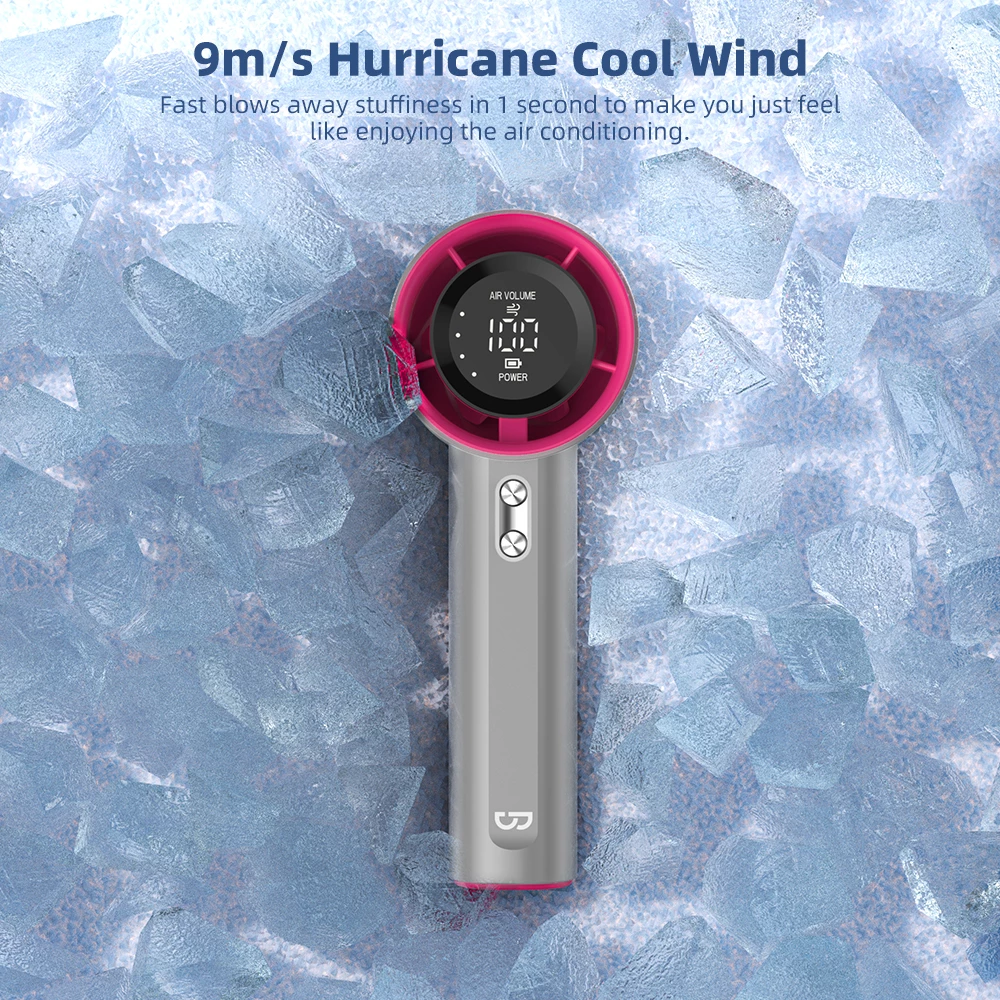
In one corner, we have the Mini Rechargeable Fan. It’s the nimble, tech-savvy challenger. Cordless, compact, and often USB-powered, it promises personal cooling freedom, ready to be your hero during sudden power interruptions.
In the other corner stands the classic Desk Fan. This is the powerhouse veteran, a reliable fixture in Filipino homes for generations. Plug it in, and you get a consistent, powerful blast of air designed to endure hours of continuous operation.
So, Alin ang Mas Sulit?
This is the ultimate question we’re here to answer. This guide will break down the real-world performance of both the mini rechargeable fan and the desk fan. We’ll dive deep into a head-to-head comparison based on the factors that truly matter to you: cooling power (lakas ng hangin), energy savings (tipid sa kuryente), portability, initial cost, and of course, brownout-readiness. Our goal is to give you the clear, straightforward insights you need to decide which fan is truly “mas sulit” for your WFH setup in 2025.
Understanding the Mini Rechargeable Fan: Compact and Cordless Cooling
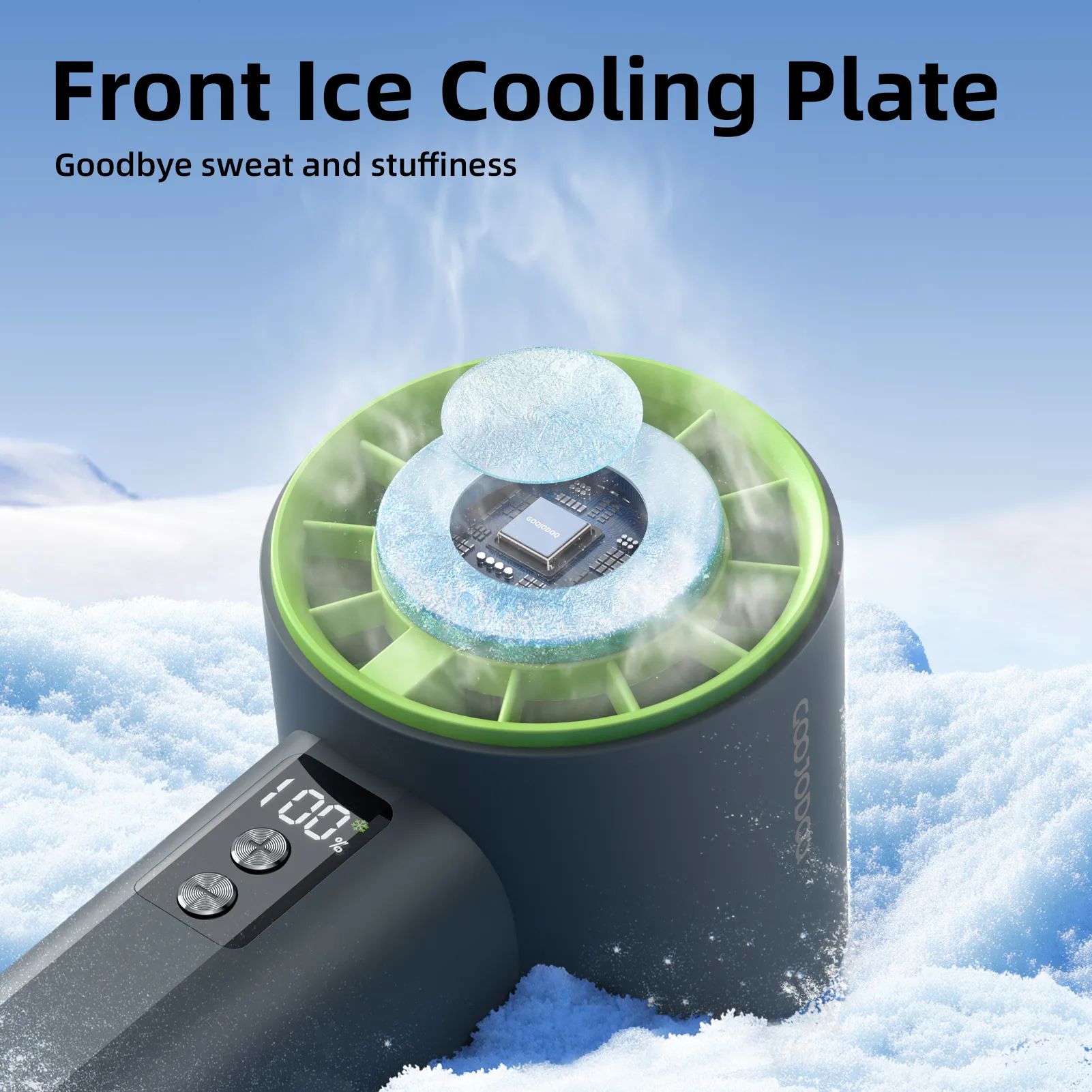
Let’s get straight to the point: the mini rechargeable fan is all about freedom. In a world where your workspace might be your dining table one day and a small corner of your bedroom the next, this little gadget offers a level of flexibility that a traditional desk fan simply cannot match. It’s the modern answer to a very Filipino problem: how to stay cool and productive, no matter what.
Its core appeal is right there in the name – it’s mini, and it’s rechargeable. This means no more tripping over wires or hunting for the nearest electrical outlet. It’s the grab-and-go solution for personal cooling.
The Unmatched Power of Portability and Flexibility
Think about the typical work-from-home setup in Metro Manila or other urban centers. Space is a premium. The mini rechargeable fan’s biggest selling point is its tiny footprint. It can sit comfortably next to your laptop without hogging precious real estate, a stark contrast to a bulky desk fan that demands its own territory.
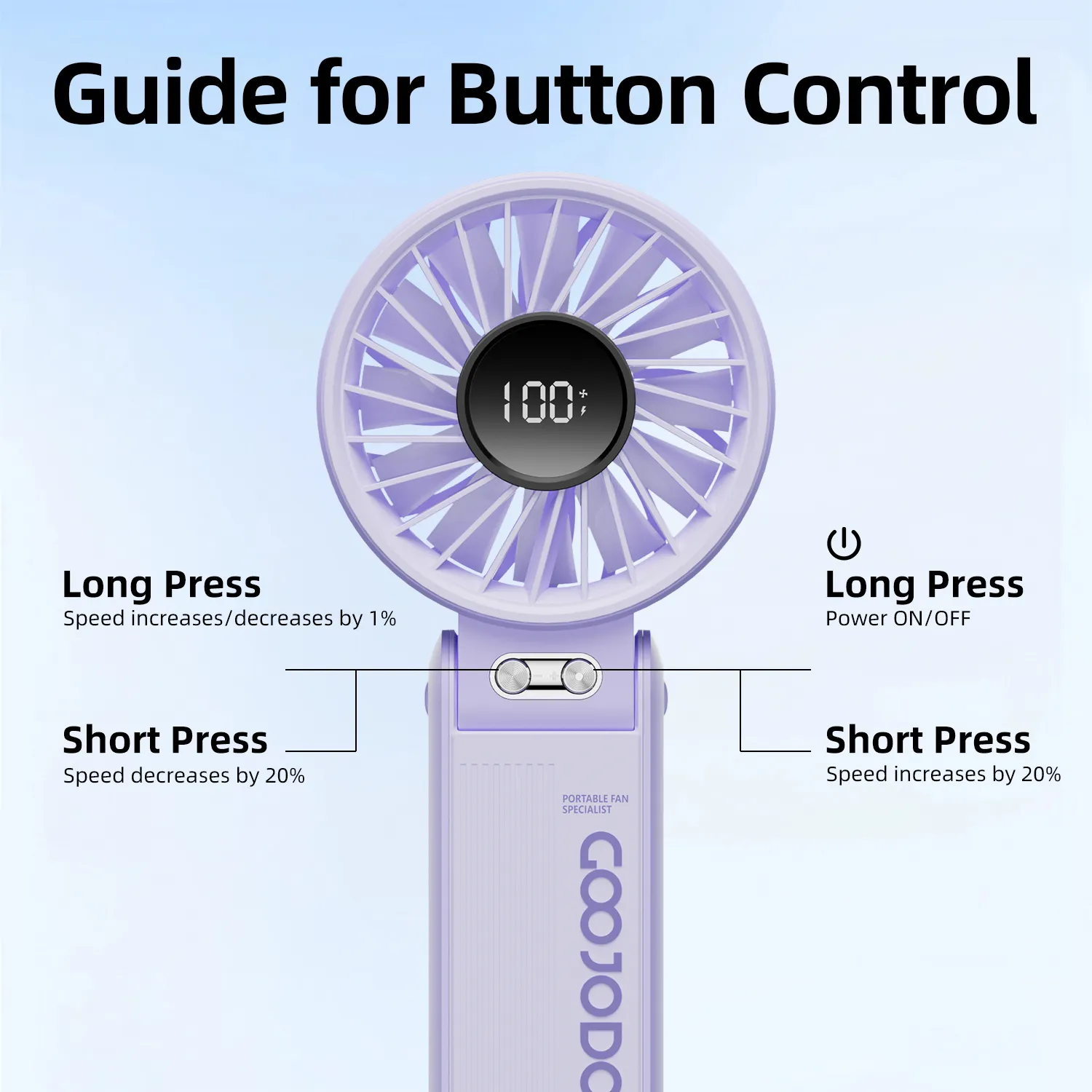
But it’s not just about saving space. Its lightweight design and cordless nature mean your personal breeze isn’t chained to your desk. Taking a quick break on the balcony? Bring it with you. Need to focus in the living room while the kids watch TV? It’s your silent partner. This is untethered cooling, tailored for the dynamic WFH life.
Key Advantages for the Filipino WFH Warrior
Beyond its size, the mini rechargeable fan packs several features that make it incredibly “sulit” for anyone working remotely in the Philippines.
1. The Ultimate “Brownout-Ready” Work Companion
We’ve all been there. You’re in a deep focus state, hammering out a report for a deadline, and then… silence. The lights go out, the Wi-Fi dies, and a wave of heat instantly washes over you. Power interruptions, or “brownouts,” are a fact of life here, especially during the sweltering summer months from March to May.
This is where the mini rechargeable fan becomes more than a convenience; it becomes a necessity. While your desk fan is rendered useless, this little hero keeps going for hours on its built-in battery. It’s the difference between miserably sweating through a power outage and being able to continue working on your laptop in relative comfort until the power returns. It’s your WFH continuity plan in a box.
2. “Tipid sa Kuryente”: Your Wallet’s Best Friend
With electricity rates in the Philippines being among the highest in Southeast Asia, every peso saved counts. A standard electric fan can consume anywhere from 40 to 60 watts. In contrast, a mini rechargeable fan typically uses just 4 to 10 watts while charging. The difference is significant.
Here’s a simple breakdown of what that means for your Meralco bill:
- USB Charging: Most of these fans charge via a simple USB cable. You can plug it into your laptop, a power bank, or a standard phone adapter. This low-draw charging means it sips, rather than gulps, electricity.
- Lower Long-Term Cost: While you’re working, you can have it plugged into your laptop without causing a major drain. Over a month of 8-hour workdays, the accumulated savings on your electricity bill can be surprisingly substantial compared to running a full-sized fan all day.
3. Perfect for the Modern Filipino Workspace
The rise of condominium living has redefined the Filipino home. According to real estate market reports from 2024, the average size of a new studio or one-bedroom condo in major cities is shrinking. In these compact environments, every square inch matters.
A mini rechargeable fan is designed for this reality. It fits perfectly on a small condo desk, a shared co-working space table, or even a crowded kitchen counter. It keeps you cool without adding to the clutter, maintaining a clean and minimalist aesthetic for your workspace.
4. A Focused Breeze, Exactly Where You Need It
Sometimes, you don’t need to cool the entire room; you just need to cool *you*. A desk fan often creates a wide gust of wind that can blow papers around and might be too strong for comfort. A mini fan, however, provides a concentrated and direct stream of air.
You can aim it precisely at your face or torso for instant relief without disturbing your colleague across the table or your carefully arranged documents. It’s personal, targeted cooling that keeps you comfortable and in control of your immediate environment.
Revisiting the Traditional Desk Fan: The Unwavering Workhorse of Power and Reliability
While the mini rechargeable fan brings modern convenience to the table, let’s not forget the undefeated champion of raw cooling power: the classic desk fan. For many Filipinos, this isn’t just an appliance; it’s a permanent fixture, a trusted companion that has seen us through countless humid afternoons and deadlines. When the heat is no longer a joke, the desk fan is the serious solution.
Its core promise is simple and potent: consistent, powerful, and reliable airflow that you can count on, hour after hour. It’s the dependable workhorse for the serious WFH professional who prioritizes performance above all else.
Lakas ng Hangin: Unmatched Cooling Power
Let’s be direct. When the Philippine summer sun is at its peak in 2025, and you feel the heat radiating from your laptop, a gentle breeze might not be enough. This is where the desk fan truly shines, and the difference is something you can feel immediately.
Why It Delivers More Punch:
- Bigger Blades, Bigger Airflow: It’s simple physics. The larger blades of a standard 12 or 16-inch desk fan displace a significantly larger volume of air compared to the 4 or 6-inch blades of a mini fan. This doesn’t just cool your face; it creates a cooling zone around your entire upper body and workspace.
- More Powerful Motors: Designed to be plugged directly into a 220V outlet, desk fans are equipped with more robust AC motors. This translates to higher RPMs (rotations per minute) and a stronger, more penetrating gust of wind that effectively combats intense humidity.
- Effective in Larger Spaces: A mini fan is for your personal space. A desk fan can influence the micro-climate of your entire WFH corner, providing relief not just for you but also helping to keep your electronics from overheating.
Think about those days when even the air feels heavy and sticky. A desk fan’s powerful gust can cut through that stagnant air, providing genuine, sweat-evaporating relief that a smaller fan simply cannot replicate.
The Marathon Runner: Designed for the 9-to-5 Grind (and Beyond)
Your workday isn’t a sprint; it’s a marathon. Your cooling solution needs to have the same endurance. The desk fan is built precisely for this kind of continuous, demanding operation, completely eliminating the concept of “battery anxiety” from your work life.
You plug it in at the start of your shift and forget about it. There’s no need to monitor a battery indicator, no drop in performance as the power wanes, and no interruption to your deep work flow just to find a USB port. It delivers the same strong performance in its eighth hour as it did in its first.
This reliability is a psychological comfort. In a WFH setup where you juggle deadlines, virtual meetings, and home life, the last thing you need is another device to manage. The desk fan’s “set it and forget it” nature allows you to focus 100% on your work.
A Legacy of Durability (Tibay na Subok na!)
There’s a reason why some Filipino households have desk fans that have been running for over a decade. These machines are often built with a focus on longevity and durability, a principle that feels almost old-fashioned in today’s world of disposable tech.
Built to Last:
- Simpler Mechanics: With no internal batteries, complex charging circuits, or delicate USB ports, there are fewer things that can go wrong. The design is straightforward: a motor, blades, and a switch.
- Robust Materials: Many traditional desk fans still utilize metal grilles and sturdy, weighted bases. They are designed to withstand years of stationary use and the occasional accidental knock without falling apart.
- Proven Track Record: Brands that have been in the Philippine market for generations have perfected the art of creating reliable fans. This time-tested engineering means you’re investing in a product built for years of service, not just a season.
Value for Your Peso: The Upfront Cost Advantage
When we talk about “sulit,” the initial investment is a major factor. In this arena, the basic, no-frills desk fan often presents a compelling case. For a very reasonable price, you can acquire a powerful cooling machine.
While premium, feature-rich desk fans exist, the entry-level models provide incredible cooling power per peso. If your primary goal is to get the strongest possible breeze for the lowest possible cash outlay, the desk fan is almost always the more economical choice. It’s a straightforward investment in a core function: moving air effectively, without paying extra for portability features you may not need for a static WFH setup.

The “Sulit” Showdown: A Head-to-Head Comparison
So, you’ve narrowed it down to these two contenders. But which one truly gives you the most bang for your buck—or “sulit” value—in a 2025 Philippine WFH setting? To figure that out, we need to move beyond the surface and pit them against each other on the factors that genuinely matter to every remote Filipino worker.
Let’s break it down, round by round, to see which fan comes out on top for your specific needs.
Round 1: Cooling Power (Lakas ng Hangin)
This is the main event, the very reason you’re buying a fan. But “power” isn’t just about how strong the wind is; it’s about how that wind is delivered.
The Verdict: The Desk Fan for raw strength, the Mini Fan for focused relief.
The traditional desk fan is the undisputed heavyweight champion here. Its larger blades and more powerful motor are designed to move a significant volume of air. It creates a wide, consistent breeze that can cool not just you, but a small portion of your room. On those brutally hot May afternoons, the sheer force of a desk fan is often the only thing that feels like it’s making a real difference.
However, that power can sometimes be overkill. It can blow papers off your desk, dry out your eyes, and be a bit noisy during an important Zoom call. Think of it as a wide-angle lens for cooling.
The mini rechargeable fan, in contrast, is a sniper. It delivers a direct, concentrated stream of air exactly where you point it. It won’t cool your entire upper body, but it will provide a very personal and immediate sense of relief on your face and neck. For someone who just needs to stop sweating over their keyboard without causing a mini-tornado on their desk, this targeted approach is often more than enough.
Round 2: Energy Consumption (Tipid sa Kuryente)
Let’s be real, with Meralco bills being a constant topic of conversation in 2025, every watt counts. How much will your choice of fan add to that dreaded monthly statement?
The Verdict: The Mini Rechargeable Fan, by a landslide.
This is where the mini fan truly shines and proves its “sulit” credentials. A typical desk fan plugged into the wall might consume anywhere from 30 to 60 watts of electricity. While not a major energy hog like an air conditioner, running it for 8-10 hours a day, five days a week, will absolutely make a noticeable impact on your bill over time.
A mini rechargeable fan, on the other hand, operates on a completely different scale. It typically charges using a 5V USB connection, drawing a mere 5 to 10 watts—similar to charging a smartphone. You can power it up from your laptop, a power bank, or a small USB wall adapter. The cost of charging it for a few hours is practically negligible. This is a massive long-term saving that compounds month after month.
Round 3: Portability and Space-Saving
Your WFH setup might be a dedicated home office, or it might be the corner of your dining table. In the Philippines, where condo living and multi-purpose rooms are the norm, every square inch of desk space is prime real estate.
The Verdict: The Mini Rechargeable Fan is the undisputed champion.
There’s no contest here. A desk fan, even a “small” one, has a significant footprint. It claims a permanent spot on your desk or a nearby table, and its power cord adds to the cable clutter we all try to fight. It’s designed to stay put.
The mini rechargeable fan is the definition of freedom. It’s cordless, lightweight, and compact. You can place it right next to your monitor, move it to the other side of your laptop, or even take it with you to the kitchen while you make coffee. When the workday is over, you can easily stash it in a drawer. This flexibility is invaluable for those with limited space or who appreciate a minimalist, clutter-free environment.
Round 4: Cost and Initial Investment (Puhunan)
How much cash do you need to shell out right now? Your budget is a primary driver, and the price difference between these two options can be a deciding factor.
The Verdict: It’s a tie, depending on what you’re looking for.
As of 2025, you can find basic, no-frills desk fans for as low as PHP 800, with more durable, well-known brands costing upwards of PHP 1,500. These are built to last for years, so you can see it as a long-term investment in a sturdy appliance.
Good quality mini rechargeable fans have a similar price range, typically from PHP 500 to PHP 1,200. While cheaper options exist, investing in a slightly more expensive model often gets you better battery life and more durable construction. The initial “puhunan” is very comparable, so the decision here leans less on the upfront cost and more on the long-term value you get from the features discussed above.
Round 5: Brownout Performance
Ah, the classic Philippine experience: you’re on a roll, deep in focus, and suddenly… everything goes dark. Unscheduled power interruptions are a frustrating reality for WFH professionals, capable of derailing an entire workday.
The Verdict: The Mini Rechargeable Fan is a non-negotiable lifesaver.
When the power goes out, your desk fan becomes nothing more than a plastic sculpture. You’re left to suffer in the heat, your productivity and mood plummeting with each passing minute.
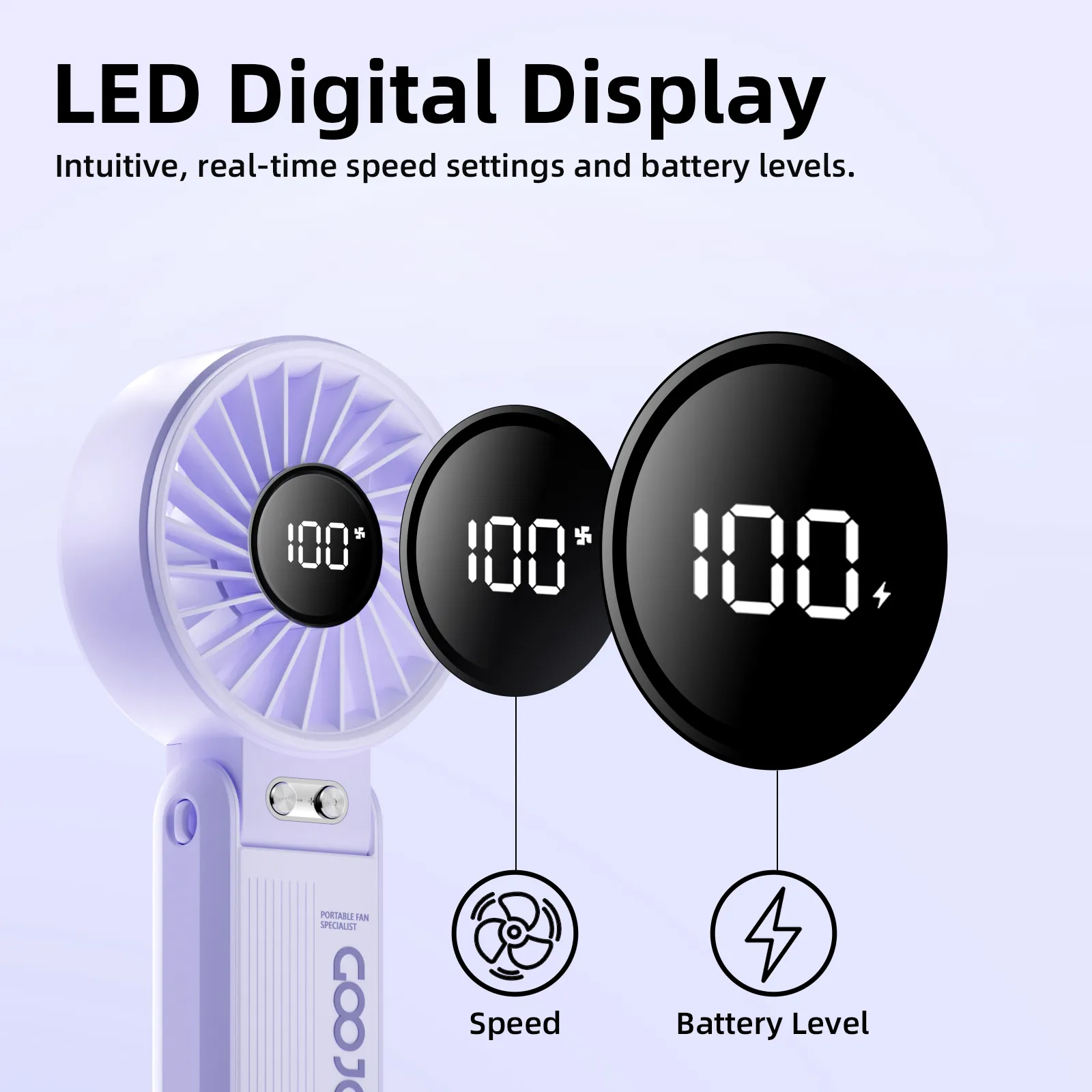
This is the mini rechargeable fan’s heroic moment. With its built-in battery, it just keeps going. A fully charged mini fan can provide you with 3 to 8 hours of personal cooling, depending on the speed setting. This is more than just a convenience; it’s a critical business continuity tool. It allows you to stay comfortable and focused, finish that report on your laptop, or wait out the brownout without breaking a sweat. In a country where power stability can be uncertain, this feature alone can make the mini fan the most “sulit” purchase you make for your WFH setup.
Which Fan Fits Your WFH Lifestyle?
The final verdict on which fan is ‘mas sulit’ doesn’t come from a spec sheet. It comes from looking at your daily grind, your workspace, and your tolerance for the Philippine heat. It’s a personal choice. So, let’s break it down. Find your team below to see which fan is truly built for your work-from-home reality.
You’re on Team Mini Rechargeable Fan If…
The mini rechargeable fan is more than just a gadget; it’s a symbol of modern, flexible WFH life. If any of these scenarios sound familiar, you’re definitely on this team.
…Your Desk Space is a Precious Commodity
Living in a 25-square-meter condo in Mandaluyong? Is your ‘office’ a small corner of your bedroom? In today’s urban living landscape, every square inch of desk real estate is gold. A bulky desk fan can feel like an unwelcome invader, cluttering your space and your mind.
The mini fan is your minimalist hero. It sits neatly beside your laptop, occupies less space than your coffee mug, and keeps your setup looking clean and professional for those surprise Zoom calls. It’s the perfect solution for:
- Condo dwellers and studio apartment residents.
- Those with multi-purpose desks used for work, hobbies, and dining.
- Anyone who values a clean, aesthetic, and clutter-free workspace.
…The Word ‘Brownout’ Gives You Anxiety
We’ve all been there. You’re in a deep focus state, about to hit ‘send’ on a crucial email, and then… darkness. Silence. The dreaded brownout. In the Philippines, power interruptions are not a matter of ‘if’ but ‘when’. A 2024 study on remote work productivity in Southeast Asia identified unscheduled power outages as a top 3 challenge for Filipino remote workers.
This is where the mini rechargeable fan becomes a lifesaver, not just a convenience. While your Wi-Fi might be down, you can still tether to your phone’s data and keep working on your laptop. But without airflow, the heat and humidity can become unbearable within minutes, killing your focus. A fully charged mini fan gives you hours of personal cooling, allowing you to power through the outage without breaking a sweat. It’s your personal productivity shield against an unreliable grid.
…You Value Portability and a ‘Work from Anywhere’ Vibe
Your WFH setup isn’t just confined to your desk. Sometimes you work from the sofa, the dining table, or even the balcony for a change of scenery. A traditional desk fan keeps you tethered to a power outlet.
A mini rechargeable fan embraces the true spirit of remote work. It’s your portable comfort companion. Take it to the kitchen while you prep lunch. Bring it to the living room for a brainstorming session. Its USB charging capability means you can even power it up with your laptop or a power bank, making it the ultimate tool for a truly mobile work style.
You’re on Team Desk Fan If…
Don’t count out the classic just yet. The traditional desk fan has been a staple in Filipino homes for a reason. It’s a workhorse. If you prioritize raw power and endurance, this is your champion.
…You Need Maximum, Unrelenting Cooling Power
Let’s be honest: some summer days in the Philippines feel like you’re working in a sauna. That “singaw” (trapped heat) in a room without an aircon can be brutal. On days when the heat index is hitting dangerous levels, a mini fan’s gentle breeze might not be enough. You need a powerful, sustained gust of wind to keep you sane and focused.
A desk fan delivers that power. It moves a significantly larger volume of air, cooling not just you but your immediate personal workspace. It helps combat that ‘malagkit’ (sticky) feeling and keeps your mind sharp. If your WFH space gets direct afternoon sun or has poor ventilation, the sheer force of a desk fan is non-negotiable.
…Your Work Involves Long, Uninterrupted Hours at One Station
Are you a graphic designer rendering a video, a writer on a tight deadline, or a customer service professional on back-to-back calls for 8 to 10 hours? Your workflow demands that you stay put, and your tools need to last the entire shift without a fuss.
The desk fan is the epitome of set-it-and-forget-it reliability. You plug it in once in the morning and it runs consistently until you shut it down. There’s no battery life to monitor, no worrying about whether you remembered to charge it. For professionals who value endurance and uninterrupted performance above all else, the desk fan is the clear winner.
…You Have a Stable Power Supply and Dedicated Space
If you’re fortunate enough to work in a location with a stable power supply and have a dedicated home office with ample desk or floor space, the primary advantages of a mini fan (portability and brownout-readiness) become less critical. In this scenario, you can optimize for pure comfort and cooling performance, a category where the desk fan almost always excels. It’s a permanent fixture that does its one job exceptionally well.
The ‘Diskarte’ Move: Why Not Both? The Hybrid Approach
In the Philippines, we are masters of ‘diskarte’—finding clever, practical solutions to everyday problems. When it comes to your WFH cooling setup, the most ‘sulit’ approach might not be choosing one over the other, but using both in a strategic tag-team.
Think of it as creating a multi-layered cooling system. The desk fan acts as your base, your primary cooler. Place it a little further away to improve the overall air circulation in your room, preventing the air from becoming stagnant and hot. It works tirelessly in the background to maintain a comfortable ambient temperature.
Then, the mini rechargeable fan becomes your tactical tool. Keep it on your desk for a direct, focused stream of cool air when you need it most. Use it during an intense video conference call to prevent sweating on camera, or as a quiet, personal breeze during deep concentration tasks. And of course, it’s your instant backup the moment a brownout hits. This hybrid strategy gives you the best of both worlds: the power and reliability of the desk fan combined with the flexibility and emergency-readiness of the mini fan. It’s the ultimate ‘diskarte’ for conquering the Philippine heat and mastering your WFH game.
.webp)
Conclusion: Your Ultimate Choice for a Cooler WFH Day
So, after weighing the pros and cons, which fan truly deserves a spot on your desk? The final answer to the “Alin ang mas sulit?” debate isn’t about picking a universal winner. It’s about finding the perfect match for your specific work-from-home reality in the Philippines.
The best fan is the one that directly solves your biggest daily frustrations—be it the stifling afternoon heat, the dreaded surprise “brownout,” or a cluttered workspace—and empowers you to do your best work, comfortably.
A Quick Recap: The Strengths That Define Them
Let’s boil down the core differences one last time. Your choice is a trade-off between two very different philosophies of cooling.
- Mini Rechargeable Fan: The Champion of Flexibility and Preparedness. Its value lies in its unmatched portability and, most importantly, its ability to be your lifeline during power interruptions. It’s the hero for tight spaces, minimalist setups, and anyone who can’t afford to have their workflow stopped by an unstable power grid.
- Classic Desk Fan: The Workhorse of Power and Endurance. This fan’s reputation is built on raw, uncompromising cooling power. It’s engineered for continuous, long-hour operation, delivering a strong and steady airflow that a mini fan often can’t match. It remains the top choice for those who need maximum cooling strength to survive the most intense heat.
What “Mas Sulit” Really Means for Your WFH Setup
Here in the Philippines, “sulit” is more than just the price tag. It’s the total value you get. It’s the problem solved, the convenience gained, and the long-term satisfaction. To find your “mas sulit” choice, you need to identify your primary need.
If Your “Sulit” is Uninterrupted Productivity…
Is your biggest fear a power outage hitting right in the middle of a critical client presentation? If the thought of being left powerless and sweating during a deadline chase gives you anxiety, the mini rechargeable fan is your most “sulit” investment. Its battery is not just a feature; it’s an insurance policy for your productivity. The peace of mind it offers is priceless.
If Your “Sulit” is Overcoming Extreme Heat…
Maybe you work in a room that gets direct afternoon sun, turning your workspace into a virtual sauna by 2 PM. If your main goal is to blast that heat away with a powerful, consistent stream of air, then the sheer cooling performance of a traditional desk fan delivers the best value for you. In this case, “sulit” is measured by how effectively it keeps you from melting at your desk.
If Your “Sulit” is a Smart, Efficient Workspace…
For those working in a compact condo or a carefully curated home office, space is a premium. The small footprint, lack of messy wires, and energy-efficient USB charging of a mini rechargeable fan provide immense value. “Sulit” here means a decluttered desk and potentially lower long-term electricity costs—a smart choice for both your space and your wallet.
The Final Call: Invest in Your Comfort
At the end of the day, choosing a fan is an investment in your personal comfort and professional productivity. The right choice can transform a frustrating, sweaty workday into a focused and comfortable one.
Before you make a decision, take a hard look at your environment. Assess your desk space, consider the frequency of power interruptions in your area, and be honest about how much cooling power you truly need. Are you on “Team Mini Fan,” prioritizing flexibility and brownout-readiness? Or are you on “Team Desk Fan,” demanding sheer power and unwavering performance?
By aligning your choice with your unique needs, you’ll find the fan that is truly “mas sulit” for you—a reliable partner that will help you stay cool and conquer the challenges of working from home in our tropical climate.
Sale
- 3-Month Extended Replacement Plan
GOOJODOQ Portable Fans High-Speed GFS006
Original price was: ₱869.00.₱830.00Current price is: ₱830.00. Select options This product has multiple variants. The options may be chosen on the product pageSale
- 3-Month Extended Replacement Plan
GOOJODOQ High Speed Handheld Fan GFS001
Original price was: ₱827.40.₱680.00Current price is: ₱680.00. Select options This product has multiple variants. The options may be chosen on the product pageSale
- 3-Month Extended Replacement Plan
GOOJODOQ High Speed Mini Fan GFS007
Price range: ₱520.00 through ₱580.00 Select options This product has multiple variants. The options may be chosen on the product pageSale
- 3-Month Extended Replacement Plan
GOOJODOQ Foldable Portable Fan GFS003
Original price was: ₱523.95.₱489.00Current price is: ₱489.00. Select options This product has multiple variants. The options may be chosen on the product page
09Apr


 29Apr
29Apr
 30Apr
30Apr