







 09Apr
09Apr
The Heat is On, and So is the Pressure on Your Wallet
That Familiar 2025 ‘Tag-init’ Feeling
Let’s be honest. The Philippine heat of 2025 feels different. It’s that intense, sticky, “hindi ka makahinga” kind of heat that seeps into every corner of our homes. You know the feeling all too well: the sleepless nights, the constant search for the coolest spot on the tiled floor, and that familiar sigh when you step outside into the sweltering air.
But there’s another heat that causes just as much sweat: the anxiety that comes with the arrival of the monthly Meralco bill. The question, “Sawa ka na ba sa init?” is quickly followed by, “Kaya pa ba ng budget ang aircon?”
The Great Filipino Dilemma: Comfort vs. Cost
For decades, the solution has been the same. When the heat becomes unbearable, we turn to our trusty air conditioner. The instant relief is incredible, but it comes at a steep price. Every hour the compressor hums is another addition to a bill that seems to climb higher every year.
This leaves us in a constant battle. We either endure the uncomfortable, productivity-killing heat to save a few pesos, or we surrender to the AC and brace for the financial impact. It feels like a choice between physical comfort and financial peace of mind, and frankly, we deserve both.
A Smarter Solution: Beyond the Standard ‘Bentilador’
What if the answer isn’t just about blowing air, but moving it intelligently? What if there was a tool that could make you feel just as cool as an aircon set to 22°C, but with a fraction of the energy consumption?
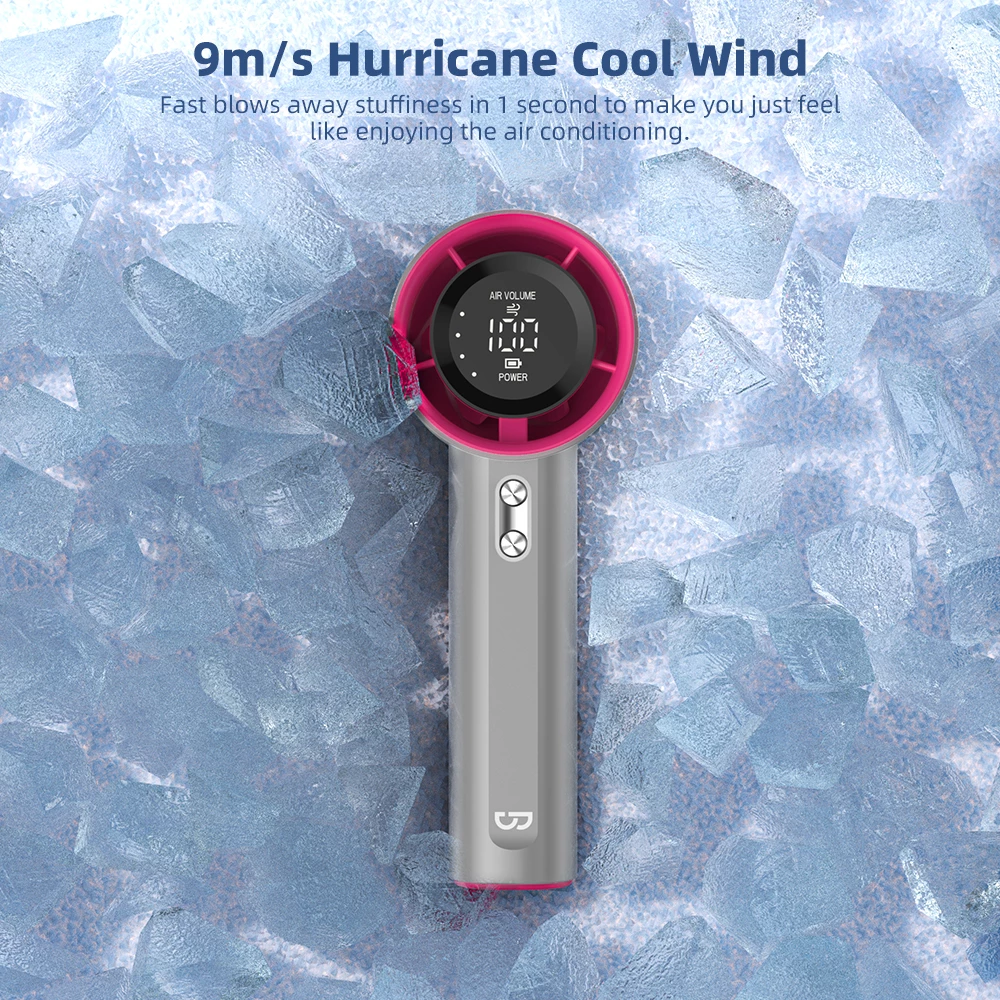
This is where the powerful small turbo fan enters the picture. Forget everything you know about your lolo’s old, rattling electric fan. This is not just another ‘bentilador.’ It’s a compact, energy-efficient powerhouse designed for one purpose: to create whole-room air circulation. It’s your secret weapon—a smart investment that directly tackles the soaring temperatures and your rising Meralco bill, promising a cooler home without the financial dread.

What Makes a “Turbo” Fan Different from Your Lolo’s Old Bentilador?
We all know and love the classic “bentilador” that has been a staple in every Pinoy household for generations. That familiar oscillating hum is the sound of many summer afternoons. But in 2025, just pushing air around isn’t enough. Technology has evolved, and the small turbo fan is the result of that evolution. It’s not just a fan; it’s an air circulator.
The fundamental difference lies in its objective. A traditional fan’s goal is to create a direct breeze. A turbo fan’s goal is to create constant, whole-room air circulation. This single change in purpose is what makes it a powerhouse for both cooling and energy savings.
The Core Concept: Creating an Air Vortex
Imagine your old fan is like an open palm, pushing a wide, unfocused sheet of air that quickly loses power. You feel cool only when you’re directly in its path. Step a few feet to the side, and the effect is gone. It offers temporary, localized relief.
Now, think of a small turbo fan as a focused jet engine for your room. It doesn’t just push air; it pulls it in, compresses it, and shoots it out in a tight, twisting column called a vortex. This high-velocity beam of air is powerful enough to travel across the entire room, hit the opposite wall, and circulate back, creating a continuous and consistent airflow that envelops the entire space.
This is the secret: you’re not just feeling a breeze. You’re feeling the entire volume of air in your room gently but constantly moving, eliminating hot spots and creating a uniformly comfortable environment.
Key Differentiators: A Head-to-Head Comparison
So, how does a small device achieve this powerful effect? It comes down to a few critical engineering advancements that leave the old designs far behind.
Air Circulation vs. Direct Wind: The Whole-Room Effect
A standard fan provides a very limited “cool zone.” If it’s oscillating, you get a few seconds of relief followed by a few seconds of still, hot air. It’s an endless cycle of waiting for the fan to turn back your way.
A turbo fan, by creating true air circulation, makes the entire room the “cool zone.” Because it moves all the air in the room, not just the air in front of it, the ambient temperature feels lower everywhere. It works smarter, not harder. You can place it in a corner, aim it at the ceiling, and it will still effectively cool the entire space by creating a powerful circulatory pattern.
Blade and Grill Design: The Vortex Engine
The magic of the vortex is born from two key components working in perfect harmony:
- Deep-Pitched Blades: Look closely at the blades of a turbo fan. They are not flat. They are steeply angled and curved, much like an aircraft propeller. This design allows them to scoop and pull in a significantly larger volume of air with every single rotation compared to the flatter blades of a conventional fan.
- Specialized Air-Taming Grill: The grill on a turbo fan is more than just a safety cover. It often features a spiral or heavily ducted design. This structure acts like a nozzle on a garden hose, taking the powerful airflow generated by the blades and focusing it into that tight, high-velocity column. It’s this focusing action that gives the air its power and range.
In contrast, your lolo’s bentilador has relatively flat blades and a simple grid-like grill, which results in a wide, chaotic, and weak airflow that dissipates almost immediately.
Power and Reach: Going the Distance
This is where the difference becomes undeniable. The focused airflow from a turbo fan allows it to achieve something a standard fan cannot: incredible reach.
A typical 12-inch desk fan might feel strong up to 5-10 feet away. A high-quality small turbo fan, often smaller in size, can project a perceptible current of air up to 70 feet (over 20 meters) away. This isn’t just a gimmick; it’s a game-changer for home cooling.
What does this mean in a real Filipino home?
- You can place the fan in your living room and feel its effect in the kitchen.
- You can aim it at the ceiling to push down the hot air that naturally rises and gets trapped there, a common problem in houses without high ceilings.
- In a small condo, it ensures that there are no stagnant, stuffy corners.
This incredible reach is achieved through efficiency, not just brute force. The smart aerodynamic design means it can move more air (measured in Cubic Feet per Minute or CFM) using a motor that consumes far less electricity (watts) than an old, noisy fan trying to achieve a fraction of the same result.

The Science of Cooling: How Air Circulation Slashes Your Electricity Costs
Let’s be honest, the moment we feel that first wave of intense 2025 summer heat, our hand instinctively reaches for the aircon remote. But then, the memory of last month’s Meralco bill hits us, and we hesitate. What if there was a smarter way? The secret isn’t just about making cold air; it’s about using the air in your room more intelligently. This is where the science behind a small turbo fan becomes your greatest ally, turning a simple breeze into a powerful cost-cutting tool.
The core principle is simple: effective air circulation makes you feel cooler without actually lowering the room’s temperature. This allows you to rely less on your energy-hungry air conditioner, leading to savings that are anything but small.
Feeling Cooler, Not Just Windier: It’s All About Wind Chill
Have you ever wondered why a gentle breeze on a hot day feels so incredibly refreshing? That’s the wind chill effect in action, and a turbo fan is designed to master it. Your standard electric fan, or the old bentilador from your lolo, often just pushes a sheet of hot air at you. A turbo fan does something far more sophisticated.
Our bodies have a natural cooling system: we sweat. For that sweat to cool us down, it needs to evaporate. This process of evaporation draws heat away from our skin, making us feel cooler.
A turbo fan accelerates this process exponentially. It creates a focused, high-velocity column of air that moves consistently across your skin, whisking away moisture and heat much faster. You’re not just feeling wind; you’re actively supercharging your body’s built-in air conditioner. The result is feeling several degrees cooler, even when the thermostat in the room hasn’t changed at all.
Energy Efficiency by the Numbers: Doing More with Less Wattage
For every Filipino looking for diskarte to manage household expenses, understanding wattage is key. Wattage is simply the measure of how much electricity a device consumes. The lower the wattage, the less it costs to run.
This is where a small turbo fan truly shines and exposes the inefficiency of older appliances.
- Old-School Fans: Many large, traditional stand fans can consume anywhere from 60 to over 100 watts, while often failing to circulate air effectively across a large room.
- Small Turbo Fans: In contrast, many modern, powerful small turbo fans operate on a fraction of that power, often using as little as 30 to 45 watts even at higher settings.
The real measure of efficiency is how much air a fan moves for every watt of power it consumes. Because of their advanced blade design and aerodynamic grill, turbo fans move a significantly larger volume of air (measured in Cubic Feet per Minute or CFM) per watt. You’re getting a more powerful cooling effect for less than half the electricity cost. It’s the ultimate definition of sulit.
The Aircon’s Best Friend: Your Ultimate “Tag-Team” Against the Heat
Here is the single most impactful strategy to slash your Meralco bill this year: use a small turbo fan *with* your air conditioner. Think of them not as competitors for the wall socket, but as the perfect tag-team partners.
The problem with air conditioning alone is uneven cooling. Cold air is dense, so it tends to sink and pool in one area of the room, often near the AC unit itself. Your aircon’s sensor, located on the unit, thinks the room is cool, while the other side of the room remains warm. This forces the AC’s compressor to work longer and harder to cool the entire space, which is the primary driver of high electricity bills.
A small turbo fan completely solves this problem.
The Game-Changing Strategy
- Turn on your aircon, but set the thermostat higher. Instead of your usual 18°C or 20°C, set it to a more energy-efficient 24°C or 25°C.
- Place the small turbo fan strategically. Don’t just point it at yourself. Aim it towards the ceiling or an opposite wall to create a vortex of air. This will grab the cold air from the AC and circulate it evenly throughout the entire room.
- Enjoy the same level of comfort. With the air constantly moving, the wind chill effect will make 25°C feel just as comfortable as a static 20°C room, eliminating hot and cold spots.
The financial impact of this is enormous. According to energy experts, for every degree you raise your air conditioner’s thermostat, you can save between 3% to 5% on cooling costs. By raising it from 20°C to 25°C, you could be looking at a potential 15% to 25% reduction in your aircon’s electricity consumption. Over a month, that’s a significant amount of pesos back in your pocket, all thanks to a small, low-wattage fan doing the heavy lifting of circulation.
Small Footprint, Mighty Impact: The Advantage of Portability in a Filipino Home
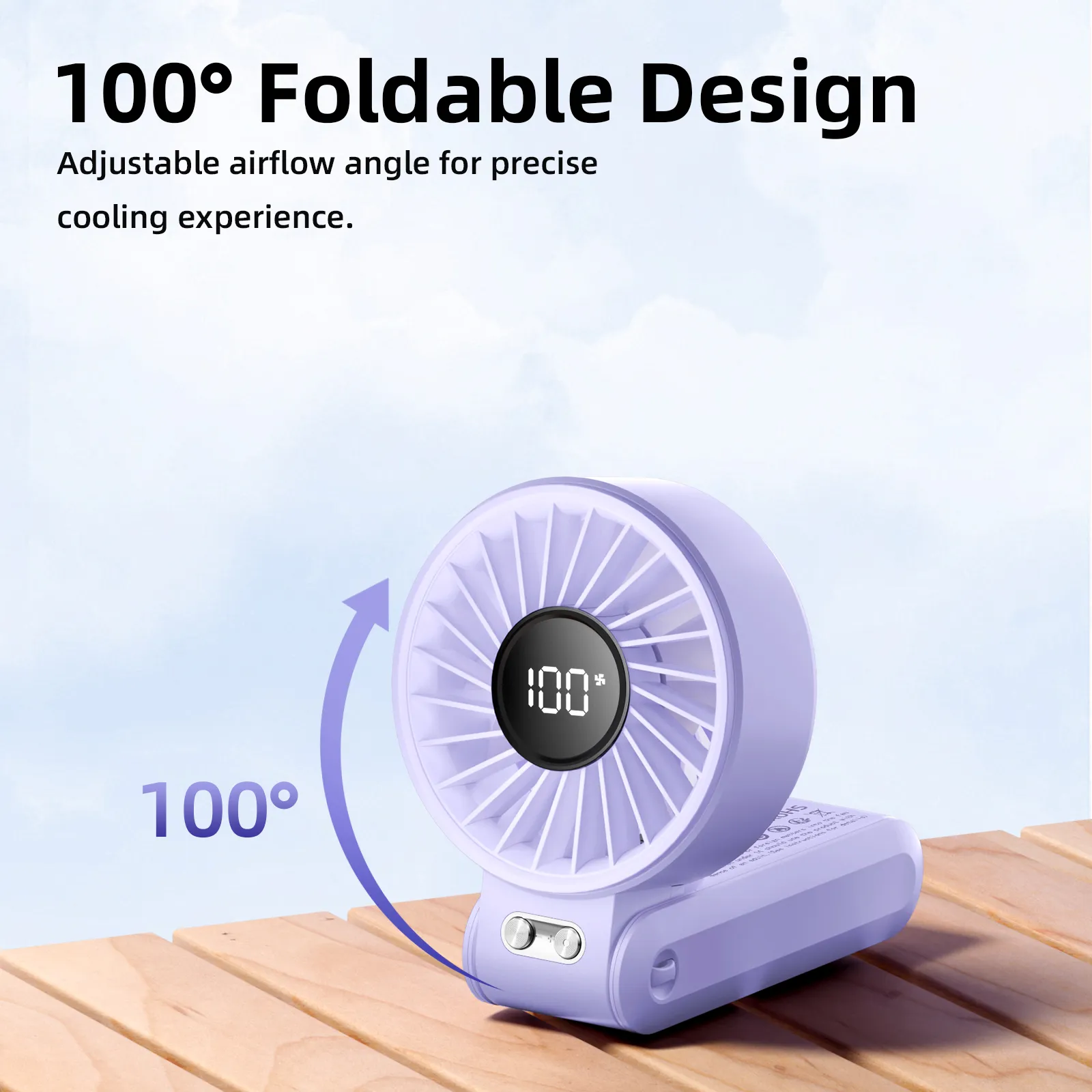
In the Philippines, space is a luxury. We master the art of maximizing every square inch of our homes. This is where the small turbo fan truly outshines its bigger, bulkier cousins. It’s not just about saving space; it’s about reclaiming it. A traditional stand fan, with its wide base and towering height, dictates where your furniture can go. A small turbo fan, however, adapts to your life, not the other way around.
This compact powerhouse delivers a mighty blast of air without demanding a large portion of your floor space. It’s the physical embodiment of “small but terrible”—terribly effective against the heat, that is. Think of it as your secret weapon in the battle for both comfort and a clutter-free home.
Your Personal Breeze in a “Siksikan” World: The Condo-Dweller’s Dream
Let’s be honest, the average condo unit in Metro Manila in 2025 isn’t getting any bigger. When you’re working with a floor plan of 25 to 40 square meters, every single item you own needs to justify its existence. A clunky, space-eating appliance is the last thing you need.
The compact design of a small turbo fan is a game-changer for modern Filipino living. Its minimal footprint means it can be placed almost anywhere without causing an obstruction or making a room feel more “siksikan” (crowded).
- On the Bedside Table: Enjoy a powerful, cooling breeze all night without needing a separate stand fan eating up precious walking space in your bedroom.
- The Work-From-Home Essential: Placed on the corner of your desk, it provides focused cooling during long hours of video calls and deadlines, keeping you fresh and alert without freezing out everyone else in the room.
- In the Smallest Nooks: It can sit discreetly on a bookshelf, a kitchen counter, or even on the floor tucked away under a table, providing powerful air circulation from an unseen source.
One Fan, Many Roles: The Ultimate “Sulit” Cooling Gadget
Filipinos value things that are “sulit”—offering maximum value and utility for their cost. A small turbo fan is the definition of a sulit appliance because of its incredible versatility. It’s not a one-trick pony; it’s a multi-talented performer that adapts to your daily needs.
As a Whole-Room Air Circulator
Don’t be fooled by its size. Place a small turbo fan on the floor and aim it towards the ceiling. Its powerful, vortex-like airflow will bounce off the ceiling and walls, creating a continuous, gentle circulation of air throughout the entire room. This breaks up stagnant hot spots and eliminates that suffocating “kulob” feeling, making the whole space feel fresher and more comfortable.
As a Personal Desk Companion
When you’re the only one feeling the heat, why cool the entire house? Its compact size makes it the perfect personal fan. It delivers a concentrated stream of air to keep you cool without turning your workspace into a wind tunnel that sends papers flying everywhere. It’s a considerate way to stay comfortable in a shared space, whether at home or in the office.
As a Kitchen Smoke-Buster
We all love the smell of garlic rice and fried galunggong, but we don’t want it lingering for hours. After cooking, a small turbo fan can be your best friend. Place it near a window or door and it will efficiently push out cooking smoke, heat, and strong odors, quickly clearing the air in your kitchen and dining area.
Precision Cooling: Directing Power Exactly Where You Need It
Perhaps the most underrated feature of a small turbo fan is its ability to provide targeted cooling. Unlike an oscillating fan that gives you a brief moment of relief before turning away, a turbo fan’s powerful, focused jet of air can be aimed with precision. This opens up a world of practical, money-saving applications that are perfectly suited to the Filipino lifestyle.
Think of it as an air-based sniper rifle. You identify the problem—be it a hot spot, stagnant air, or damp clothes—and you aim the fan directly at it for a quick and efficient solution.
- Targeted Personal Comfort: Feeling hot on the sofa? Aim the fan directly at you from across the room. You’ll feel an immediate cooling effect without having to blast the aircon.
- The Rainy-Season Hack: This is a life-saver during typhoon season when you’re forced to dry laundry indoors. Aiming the concentrated airflow from a small turbo fan directly at your “sampayan” (clothesline) dramatically speeds up drying time. This not only gets you your clothes faster but also prevents them from developing that dreaded “amoy-kulob” (musty smell).
- Displacing Hot Air: Hot air rises. On a scorching afternoon, aim the fan towards the ceiling to break up that trapped layer of heat, promoting better overall air circulation and making the room feel cooler faster.

Key Features to Consider for Maximum Cooling and Savings
You get it. A small turbo fan is a game-changer. But let’s be honest, not all fans are created equal. When you’re walking down the aisle at the appliance store, the boxes all start to look the same. To truly unlock that perfect balance of “ginhawa” (comfort) and savings on your Meralco bill, you need to look past the marketing and focus on the technology inside. Think of it as choosing a smart investment for your home, not just another appliance.
Here’s what really matters under the hood. These are the non-negotiable features that separate a truly powerful and efficient small turbo fan from one that’s just blowing hot air and wasting electricity.
Motor Technology: The Heart of Your Fan and Your Savings
The single most important component that dictates both performance and energy consumption is the motor. This is the engine of your fan, and understanding the difference here is like choosing between an old, gas-guzzling car and a modern, fuel-efficient hybrid.
The Old Guard: AC (Alternating Current) Motors
This is the technology in your lolo’s old, noisy bentilador. AC motors are dependable and have been around forever, but they are notoriously inefficient. They use more electricity to generate airflow and often produce more heat as a byproduct—the last thing you need during a 2025 heatwave! They typically only offer a few speed settings (usually just low, medium, and high) because controlling their speed is more complex and costly.
The Modern Champion: DC (Direct Current) Motors
If you see a fan advertised with a DC motor, pay attention. This is the modern standard for energy efficiency. Think of it like the “inverter” technology in air conditioners and refrigerators that everyone in the Philippines now looks for. DC motors are whisper-quiet and, most importantly, incredibly energy-efficient.
How efficient? A small turbo fan with a DC motor can consume up to 70% less electricity than a comparable fan with a traditional AC motor. Over a month of constant use, that translates to real, tangible savings you can see on your Meralco bill. They also run cooler and have a significantly longer lifespan, making them a wiser long-term investment.
Speed Settings and Control: More Than Just “Low, Medium, High”
Power is useless without control. The ability to fine-tune your fan’s airflow is critical for both comfort and energy management. The old three-speed system is a blunt instrument in a situation that requires precision.
Modern small turbo fans, especially those with DC motors, offer a much wider range of speed settings—sometimes from 8 up to 12 or even more. This isn’t just a gimmick; it’s about giving you the exact amount of airflow you need for any situation.
- For Sleeping: You don’t need a gale force wind. A super-low, gentle setting (often called “breeze” or “sleep” mode) circulates the air silently without being disruptive.
- For Work-from-Home: A medium-low setting can keep you cool and focused during a video call without creating a wind tunnel sound effect.
- After a Commute: Just walked in from the punishing afternoon heat? Crank it up to the highest setting for a few minutes to get instant relief and quickly cool down a stuffy room.
Having more settings means you only use the exact wattage required for the moment. You’re not forced to choose between “too weak” and “too strong,” which is often a choice between discomfort and wasted electricity.
Noise Levels (Decibels): Power Shouldn’t Be Painful
Remember the days when the only way to know a fan was powerful was if it sounded like a helicopter taking off? Thankfully, those days are over. In our modern homes, which have become our offices, classrooms, and cinemas, a quiet environment is a luxury. A loud fan is a constant source of distraction and irritation.
Look for the noise level rating, measured in decibels (dB). A lower number is always better. For context:
- 20-30 dB: This is as quiet as a whisper or the rustling of leaves. Ideal for a bedroom or a baby’s room. Many high-quality DC motor fans can achieve this on their lower settings.
- 40-50 dB: This is like the ambient noise in a quiet library. It’s noticeable but generally not intrusive for daytime use or in a living room.
- 60+ dB: This is the level of a normal conversation or louder. A fan operating constantly at this level can be disruptive, especially if you’re trying to concentrate or sleep.
A great small turbo fan proves that immense power and quiet operation can coexist. It moves a massive volume of air without forcing you to turn up your TV volume or shout during a phone call.
Safety and Maintenance: The Practical Details for a Filipino Home
Finally, practical considerations are paramount, especially in a family-oriented household. A powerful appliance must also be a safe and easy-to-manage one.
Built for “Pamilya” Safety
First, check the base. A small fan with a powerful motor needs a sturdy, well-weighted base to prevent it from tipping over easily, especially if you have playful kids or curious pets running around. Next, inspect the grill. The gaps should be narrow enough to prevent small fingers or paws from getting through. A well-designed fan puts safety first, no compromises.
Designed for Easy Cleaning
Let’s face it, our homes get dusty (“maalikabok”). Dust accumulation on fan blades doesn’t just look bad; it can hinder airflow, reduce efficiency, and circulate allergens around the room. A fan that is a nightmare to clean will eventually become an inefficient one.
Look for models with an easily removable front grill. A simple twist or a few screws should be all it takes to access the blades for a quick wipe-down. This simple design feature makes regular maintenance effortless, ensuring your fan continues to perform at its peak and circulate clean air for years to come.

Conclusion: Outsmart the Heat, Don’t Just Endure It
So, let’s be honest. For too long, our choice during the sweltering Philippine heat has felt like a trap: suffer in a stuffy room or brace for the shock when that Meralco bill arrives. But as we’ve explored, the game has changed. The solution isn’t just about more power; it’s about smarter power. A small turbo fan isn’t another appliance to add to the bill; it’s a strategic tool designed to break that cycle of heat and high costs.
Your New Game Plan Against the 2025 Heat
Forget everything you thought you knew about the old, noisy “bentilador” sitting in the corner. We’re talking about a completely different approach to cooling. To recap, the power of a small turbo fan lies in its unique advantages:
- True Air Circulation: It doesn’t just push air around. It creates a powerful, focused column of air—a vortex—that circulates all the air in your room. This eliminates hot spots and creates a consistent, comfortable environment, a feeling that a standard fan simply cannot replicate.
- Serious Energy Savings: This is the secret weapon. By using advanced motor technology and blade design, a small turbo fan moves a massive volume of air while sipping electricity. We’re talking about a fraction of the wattage used by an air conditioner, translating directly into a lower number on your Meralco bill.
- The Ultimate Aircon Partner: This is where the magic really happens. By pairing a small turbo fan with your AC, you circulate the expensive cold air efficiently. This allows you to set your aircon to a higher, energy-saving temperature (like 25°C instead of 21°C) while feeling just as cool, if not cooler. The savings from this one strategy alone can be substantial.
- Mighty Power, Minimal Space: In modern Filipino homes, from compact condos in BGC to space-conscious family houses, every square foot matters. A small turbo fan delivers room-filling performance from a tiny footprint, giving you back your valuable floor space.
More Than a Fan: An Investment in Comfort and Peace of Mind
Think of it this way: a small turbo fan is not an expense. It’s an investment. It’s an investment in getting a good night’s sleep without sweating through your sheets. It’s an investment in a productive work-from-home environment where you’re not constantly distracted by the oppressive heat.
Tale of Two Bills
Imagine your Meralco bill. One path is the “brute force” method: running the aircon on high for hours, leading to a bill that makes you wince. The other path is the “smart” method: using a small turbo fan to maximize cooling efficiency, resulting in a bill that brings relief instead of anxiety. This is about taking back control from the fluctuating electricity prices and the unrelenting climate.
This single device fundamentally changes your relationship with cooling. You’re no longer just reacting to the heat; you’re proactively managing your home’s environment in the most cost-effective way possible.
Ready to Change Your Cooling Strategy for 2025?
The heat of 2025 isn’t going to wait. The question “Sawa ka na ba sa init?” is more relevant than ever. But now, you have a better answer than just turning the AC down another degree.
The next step isn’t about rushing to buy a product. It’s about rethinking your strategy. Look at your space. Think about your current electricity consumption. Consider how the science of air circulation, not just raw cooling power, can transform your home.
Empower yourself with knowledge. Understand that a small, well-designed piece of technology can have an outsized impact on your daily comfort and your monthly budget. This year, don’t just survive the heat—outsmart it. Make a choice that keeps you cool, your wallet happy, and finally puts you in control of your comfort.

Sale
- 3-Month Extended Replacement Plan
GOOJODOQ Portable Fans High-Speed GFS006
Original price was: ₱869.00.₱830.00Current price is: ₱830.00. Select options This product has multiple variants. The options may be chosen on the product pageSale
- 3-Month Extended Replacement Plan
GOOJODOQ High Speed Handheld Fan GFS001
Original price was: ₱827.40.₱680.00Current price is: ₱680.00. Select options This product has multiple variants. The options may be chosen on the product pageSale
- 3-Month Extended Replacement Plan
GOOJODOQ High Speed Mini Fan GFS007
Price range: ₱520.00 through ₱580.00 Select options This product has multiple variants. The options may be chosen on the product pageSale
- 3-Month Extended Replacement Plan
GOOJODOQ Foldable Portable Fan GFS003
Original price was: ₱523.95.₱489.00Current price is: ₱489.00. Select options This product has multiple variants. The options may be chosen on the product page
09Apr


 29Apr
29Apr
 30Apr
30Apr