







 09Apr
09Apr
Surviving the Heat and the Unpredictable
You know the feeling. The air is so thick and heavy with humidity, it feels like you’re wading through it. Your only companion is the steady hum of an electric fan, working tirelessly to offer some small relief from the relentless Philippine heat.
Then, suddenly, a click. The hum dies. A heavy silence falls over the room, a silence every Filipino recognizes with a sinking feeling. It’s the unmistakable start of a brownout. The heat, once barely kept at bay, rushes back in with a vengeance, and the sweat begins to form almost instantly.
More Than a Gadget: A Modern Survival Tool
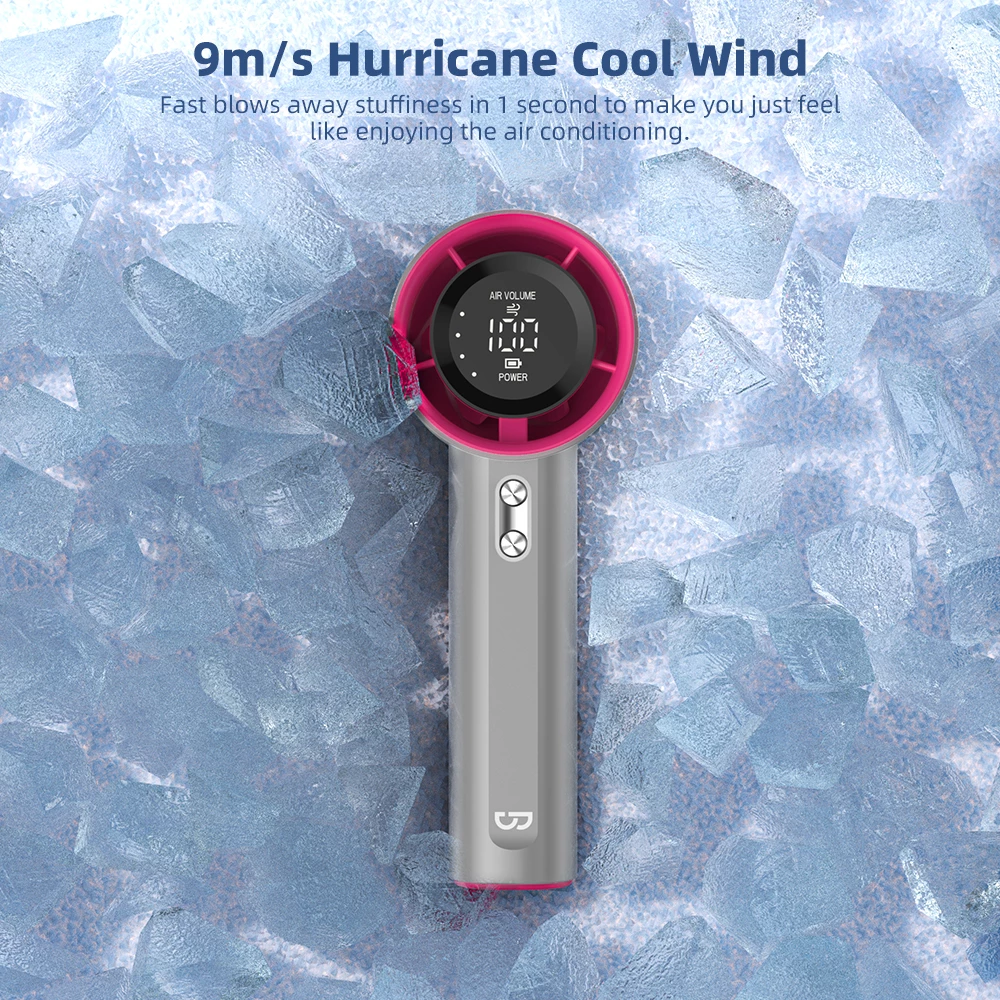
In these all-too-common moments, what can you do? This is where the rechargeable small turbo fan steps in. Forget thinking of it as just another desk accessory; for life in the Philippines in 2025, it has become nothing short of a modern-day survival tool.
This compact device is a direct answer to two of our most persistent daily challenges: the oppressive, year-round heat and the unpredictable nature of our power supply. It represents a small but powerful way to reclaim your personal comfort and sanity.
What to Expect in This Guide
This article will go beyond the surface to explain exactly why these fans are a game-changer. We’ll explore the science behind what makes a “turbo” fan so much more effective than a regular one. We will detail how its unique features provide a powerful shield against both sweltering afternoons and sudden power interruptions.
Consider this your complete guide to understanding how a rechargeable small turbo fan is engineered perfectly for the Filipino lifestyle, offering you a cool breeze of relief, anytime and anywhere.

So, What Makes a “Turbo” Fan Different from a Regular “Maliit na Fan”?
We all know the standard maliit na fan. It’s been a staple in every Filipino household for decades. You switch it on, the blades spin, and it pushes air around. But on a scorching May afternoon, you’ve probably felt that frustrating sensation – the fan is on full blast, but it feels like it’s just circulating the same hot, humid air. It offers movement, but not always relief.
This is where the term “turbo” comes in, and it is more than just a cool-sounding marketing word. It signifies a fundamental difference in engineering and design. A small turbo fan doesn’t just move air; it masterfully directs it.
It’s All About Smarter Airflow, Not Just More Air
The core concept behind a turbo fan is rooted in aerodynamics. Instead of simply creating a wide, gentle breeze that dissipates quickly, a turbo fan is engineered to produce a focused, high-velocity, and concentrated column of air. This stream travels further and feels significantly more powerful, even when the fan itself is compact.
Think of it like the difference between a garden sprinkler and a pressure-jet hose. A sprinkler covers a wide area with a gentle mist, which is nice, but not very effective for a specific target. A pressure jet, however, creates a powerful, direct stream that you can feel intensely, even from a distance. A standard fan is the sprinkler; a turbo fan is the pressure jet.
The Secret is in the Blade Design
The first thing you might notice about a turbo fan is that its blades look different. They aren’t the simple, flat paddles you see on many conventional fans. Turbo fan blades often feature a deep pitch – meaning they are angled more aggressively.
This deep-pitched design acts much like an airplane’s propeller. With each rotation, it grabs more air and thrusts it forward with greater force. This creates higher air pressure right in front of the fan, which is the starting point of that powerful, concentrated breeze you feel on your skin.
Creating a Vortex to Beat the Heat
Beyond the blades, many turbo fans incorporate a special housing or grille design that helps shape the airflow. The goal is to create a vortex, a swirling cone of air that holds its shape as it travels across a room. This is a game-changer for air circulation.
A regular fan’s breeze spreads out and loses energy almost immediately. The vortex from a turbo fan, however, cuts through the stagnant air in a room. This focused stream helps to combat that heavy, suffocating feeling of kulob (stale, trapped air), making a small space feel much fresher and more breathable.
The Feeling of a Stronger, Cooler Breeze
Here’s the most important part: the result. Because the air is moving faster and is more focused, it enhances the rate of moisture evaporation from your skin. This process, known as evaporative cooling, is your body’s natural air conditioner. A turbo fan supercharges this effect.
This is why the breeze from a small turbo fan often feels “cooler,” even though it isn’t actually lowering the room’s temperature like an aircon. The sheer velocity and concentration of the airflow provide an immediate and much more intense sensation of relief. It is the difference between a gentle caress of air and a genuinely refreshing blast that makes you say, “Ah, that’s better.” Even on its lowest setting, the targeted airflow can feel more effective than a regular fan on high.
The “Turbo” Power: Your Personal Shield Against “Grabe sa Init”
Let’s be honest, the moment the afternoon sun hits its peak, that feeling of “grabe sa init” is no joke. It’s more than just heat; it’s a heavy, draining sensation that can sap your energy and focus. This is where the “turbo” in a small turbo fan isn’t just a marketing term—it’s your first line of defense, a personal cooling shield that works smarter, not just harder, to bring you immediate relief.
Feel the Chill, Instantly: The Magic of Direct Cooling
You know that moment when a brownout hits and the oppressive heat instantly returns? That’s when you truly appreciate immediate relief. Unlike a standard fan that pushes a wide, gentle wall of air, a small turbo fan is engineered to do something fundamentally different. It creates a concentrated, high-velocity column of air.
Think of it like the difference between a garden sprinkler and a pressure washer. Both use water, but one provides a focused, powerful stream. This targeted airflow is the secret to its intense cooling effect.
How Concentrated Airflow Defeats the Heat
The science is simple but incredibly effective. The intense Philippine humidity means there’s a layer of moisture on your skin, even if you don’t feel like you’re sweating heavily. This moisture traps heat.
- Accelerated Evaporation: A turbo fan’s powerful, direct stream of air cuts through this layer, rapidly accelerating the evaporation of moisture from your skin. This process, known as evaporative cooling, is what makes you feel instantly colder and more refreshed.
- The Wind Chill Effect: It creates a potent “wind chill” effect precisely where you aim it. This makes it perfect for personal use, turning your immediate workspace or bedside area into a cool oasis, even if the rest of the room is sweltering.
This is why placing a small turbo fan on your desk while working from home, or on your nightstand as you sleep, feels so much more effective than having a large “stand fan” blowing from across the room. It’s personal, immediate, and incredibly satisfying.
Busting “Kulob”: More Than Just Moving Air, It’s Reviving It
Every Filipino knows the feeling of “kulob.” It’s that stuffy, suffocating sensation in a room with no ventilation, where the air feels thick, stale, and warm. It’s the enemy of productivity and restful sleep. A regular fan might stir this stagnant air around, but a turbo fan actively works to fix it.
Even a compact model is designed to improve a room’s entire air circulation pattern. Its blades are often deeply pitched and housed in a way that creates a vortex-like effect. This small but mighty whirlwind does more than just push air forward.
The Science of Air Circulation in a Small Package
A small turbo fan essentially acts as a mini air circulator. It pulls in the warm, stagnant air from behind and around it, then powerfully projects it forward in a focused stream. This stream travels further and with more force than that of a regular fan.
When aimed correctly (for example, towards a ceiling or an opposite wall), it can create a continuous circulation loop in a small to medium-sized room. This process effectively:
- Breaks Up Hot Pockets: It eliminates those pockets of still, hot air that tend to gather in corners and near ceilings.
- Introduces Air Movement: It replaces the feeling of “kulob” with a sense of freshness and constant air movement, making the entire space feel more comfortable and breathable.
So, you’re not just getting a breeze on your face; you’re actively combating the stale, trapped air that makes a hot day feel even more unbearable.
Your Wallet’s Best Friend: Unpacking the Energy Efficiency
With electricity rates in the Philippines being among the highest in Southeast Asia, every appliance we plug in impacts our monthly budget. Running a large electric fan or air conditioning unit all day and night can lead to a shocking Meralco bill. This is where the brilliant design of a modern small turbo fan truly shines.
Its ability to generate a powerful airflow comes from superior aerodynamic design, not brute force. This means it can achieve a high level of cooling performance while consuming a surprisingly small amount of electricity.
Doing More with Less Power
Let’s put it into perspective. A conventional 16-inch stand fan might consume anywhere from 50 to 80 watts of power on its highest setting. In contrast, many high-quality small turbo fans operate on as little as 4 to 10 watts, even at maximum speed. While the cooling “area” is more personal, the cooling “effect” on you is often stronger.
Over the course of a hot season, the savings can be significant. You get the powerful cooling you need without the guilt or financial strain of running a power-hungry appliance for hours on end. It’s a practical, cost-effective solution tailored for our economic reality.
What This Means During a Brownout
This incredible energy efficiency has a direct and crucial benefit for its rechargeable function. Lower power consumption means the fan can run for much, much longer on a single battery charge.
An inefficient fan might drain its battery in an hour or two. A well-designed turbo fan, however, can often provide a steady, cooling breeze for 8, 12, or even more than 20 hours on its lower settings. During a multi-hour brownout in the middle of a hot May afternoon, that difference isn’t just a convenience—it’s a lifesaver for your comfort and sanity.

Brownout-Proof Comfort: The Rechargeable Advantage
We’ve all been there. You’re in the middle of a crucial work meeting, enjoying a family dinner, or trying to get a decent night’s sleep during a sweltering May evening. Then, it happens. A sudden, deafening silence. The lights flicker and die. The electric fan sputters to a halt. The heat, which was just background noise, instantly becomes an oppressive, suffocating blanket. This is the reality of a brownout in the Philippines.
This isn’t just a minor inconvenience; it’s a major disruptor. In our tropical climate, a loss of power means an immediate loss of comfort, leading to restless nights, lost productivity, and frayed tempers. For hours, you’re left at the mercy of the heat, waiting for the grid to come back online. But what if you didn’t have to wait? What if you had a personal shield against this all-too-common problem?
The Game-Changer: A Built-In Rechargeable Battery
Herein lies the single most revolutionary feature of the modern small turbo fan: its rechargeable, built-in battery. This simple addition transforms the fan from a standard appliance, utterly dependent on a stable power source, into a self-sufficient survival tool for the modern Filipino. It’s the feature that directly answers the dread of a sudden brownout.
This internal power source means your comfort is no longer tied to the electrical outlet. When the neighborhood goes dark, your personal breeze keeps going, providing a continuous stream of cool air that makes an otherwise miserable situation manageable. It’s about taking back control from the unpredictability of our power supply.
How Long Does It Really Last? Demystifying Battery Life
The first question on everyone’s mind is, “Sapat ba ‘to hanggang umaga?” (Is it enough to last until morning?). The answer depends entirely on the fan’s battery capacity and your usage. While manufacturers provide estimates, real-world performance is key.
Think of it in terms of a trade-off between power and longevity. Most rechargeable turbo fans offer multiple speed settings for this very reason.
- Low Setting: Designed for endurance, this setting provides a gentle, quiet breeze. Many models can run for 8, 10, or even more hours on low, making it the perfect choice for getting you through an entire night of sleep during an overnight brownout.
- Medium Setting: A balance of airflow and battery consumption. This is ideal for a few hours of focused work at your desk or for staying comfortable while watching a movie.
- High/Turbo Setting: This unleashes the fan’s full power for immediate, intense cooling. However, this setting drains the battery much faster, often lasting just a couple of hours. It’s best used for short bursts to quickly cool down.
The technical specification to look for is the battery capacity, measured in milliampere-hours (mAh). A higher mAh number, such as 4000mAh or more, generally translates to a longer runtime. This is a crucial detail that separates a fan that can handle a short power interruption from one that can be a true all-night companion.
Charging Freedom: No Wall Socket, No Problem
The “rechargeable” aspect is about more than just surviving brownouts; it’s about ultimate flexibility. These fans break the chains of the traditional power cord, drawing power from a variety of modern sources, most commonly via a USB port.
This versatility opens up a world of possibilities and ensures you can power up almost anywhere:
- Power Banks: This is the ultimate power couple for anyone living in the Philippines. A fully charged power bank can recharge your fan multiple times, creating a completely portable and off-grid cooling system that can last for days.
- Laptops: For students and work-from-home professionals, this is a lifesaver. If a brownout hits mid-deadline, you can simply plug the fan into your laptop’s USB port and continue working in comfort, powered by your computer’s battery.
- Car Chargers: Stuck in traffic on a hot day? Or maybe you’re on a road trip when the power goes out at your destination. A car charger can get your fan running again.
- Solar Chargers: For the truly prepared or those in more remote areas, a small solar panel charger can provide a sustainable way to keep your fan powered during extended outages.
More Than Just Cool Air: The Gift of Peace of Mind
Ultimately, the advantage of a rechargeable fan goes beyond the physical sensation of a cool breeze. It offers something less tangible but far more valuable: peace of mind.
It’s the quiet confidence you feel when you see storm clouds gathering, knowing you have a reliable backup. It’s the ability to put your child to sleep comfortably, even when the power is out. It’s the small but significant victory of hearing the entire block fall silent while your personal fan continues to hum, providing a small bubble of normalcy and comfort in the midst of the disruption.
This feature fundamentally changes your relationship with brownouts. They shift from being a source of major stress and anxiety to a manageable inconvenience. That uninterrupted stream of air is an investment in your well-being, ensuring your sleep, your work, and your sanity remain intact, no matter what the power grid decides to do.
.webp)
More Than Just a Fan: Portability and Everyday Versatility
Let’s be honest, the real game-changer with a small turbo fan isn’t just the “turbo” part—it’s the freedom. This is where it truly outshines its bigger, bulkier cousins. You are no longer chained to a wall socket. Your personal comfort zone is no longer a fixed spot in a room; it’s wherever you decide to be. This is a grab-and-go solution for the modern Filipino lifestyle.
Think about the classic, heavy stand fan. It’s a commitment. You find the perfect spot for it, and there it stays, gathering dust. A rechargeable turbo fan, however, is designed for life in motion. It’s a small, lightweight companion that easily fits into a tote bag, a student’s backpack, or on the corner of an already cluttered desk without causing a fuss.
Your “Anywhere” Companion: Redefining Personal Cooling
The concept of “portability” gets a major upgrade here. We’re not just talking about moving a fan from the living room to the bedroom. We’re talking about a level of personal climate control that was unimaginable with older technology.
Its lightweight design means you barely notice it’s in your bag until that wave of intense heat hits you. It’s the difference between enduring discomfort and actively conquering it, whether you’re at home, at work, or somewhere in between. This small device creates a personal bubble of cool air, a microclimate that you control, transforming any hot, stuffy space into your own tolerable oasis.
Real-Life Scenarios: How Pinoys Are Winning Against the Heat
To truly understand its impact, let’s move away from technical specs and look at how these fans are becoming indispensable in everyday Filipino life. It’s in these daily struggles that the small turbo fan proves it’s more than just a gadget—it’s a survival tool.
The Work-From-Home (WFH) Lifesaver
The WFH setup in the Philippines is often a masterclass in improvisation. It might be a corner of the dining table or a small desk squeezed into a bedroom. When the brutal “tanghaling tapat” (midday sun) hits, that space can feel like an oven, killing your productivity and making concentration impossible.
Placing a small turbo fan on your desk provides a direct, focused stream of air right where you need it. Unlike a large fan that sends your papers flying and creates a wind tunnel effect on your Zoom calls, a turbo fan is discreet. It cools you down without disrupting your workflow, ensuring you stay fresh and focused through that 4 PM client meeting, even when the air conditioner is taking a break to save on electricity costs.
Conquering the “Kusina” Heat
Anyone who has cooked a pot of adobo or simmering sinigang in a typical Filipino kitchen knows the struggle. The heat from the stove combines with our natural humidity to create an intense, sweat-inducing environment. It can make a beloved activity feel like a chore.
This is where the small turbo fan shines. You can place it on a countertop, shelf, or even a nearby chair. It delivers a concentrated breeze that cools your face and neck without being strong enough to extinguish the flame on your gas stove. It makes preparing family meals a more pleasant, bearable experience, especially when you’re cooking for an extended period.
Your Secret to a Mahimbing na Tulog (Deep Sleep)
A hot, stagnant bedroom is the enemy of good sleep. We’ve all been there—tossing and turning, fanning ourselves with a piece of cardboard, praying for a breeze. The situation gets ten times worse during a brownout, when the silence is deafening and the heat is suffocating.
A rechargeable turbo fan placed on your bedside table is a true game-changer for sleep quality. Many models are designed for ultra-quiet operation, providing a gentle, consistent airflow that lulls you to sleep. It’s the perfect middle ground—more effective than a handheld “pamaypay” and far less noisy and disruptive than an old, rattling electric fan. And when the power inevitably cuts out at 2 AM, your fan keeps running, ensuring your sleep is uninterrupted.
The Ultimate Commute and “Lakad” Partner
Ah, the Filipino commute. Whether you’re waiting for a ride under the scorching sun, squeezed into a non-airconditioned jeepney during rush hour, or lining up for the MRT, the heat can be draining. These moments of transit are often the most uncomfortable parts of our day.
Imagine being able to pull a powerful little fan out of your bag. It’s instant relief. It makes that wait more tolerable and that ride more comfortable. It’s not just for commutes, either. Think of all the times you’re in non-airconditioned spaces: paying bills at a government office, shopping at the local “palengke” (wet market), or waiting for a friend. This fan is your personal weapon against public heat.
Beyond the Four Walls: For Outings and Car Rides
The fan’s utility doesn’t end at your doorstep. It’s an essential item for weekend outings. Heading to a family picnic? Bring it along to keep the air moving around the food and guests. Sitting in a car that’s been parked under the sun? Use the fan to get the air circulating and cool down the interior faster.
For parents, it’s a lifesaver for keeping babies and young children comfortable in the backseat during car rides or in their strollers during a walk in the park. It’s a small piece of home comfort that you can take with you, ensuring the heat doesn’t spoil your precious leisure time.

Choosing Your Champion: Key Features to Understand in a Small Turbo Fan
Not all heroes wear capes, and not all small fans are created equal. When you’re looking for that perfect gadget to be your personal lifesaver, the technical details on the box actually matter. Understanding these features is the difference between buying a fan that dies halfway through a brownout and one that keeps you cool all night long. Let’s break down what you really need to look for.
The Heart of the Matter: Battery Capacity (mAh)
If there’s one specification to pay close attention to, this is it. The battery capacity, measured in milliampere-hours (mAh), is the single biggest indicator of how long your fan will run on a single charge.
Think of it like the fuel tank in a car. A higher mAh number means a bigger tank, giving you a longer runtime before you need to refuel (or, in this case, recharge).
- What the Numbers Mean: A small fan with 2000mAh might give you 2-4 hours of relief on a low setting, perfect for a short power interruption. A model boasting 5000mAh could push that to 8-10 hours, while some powerhouse 10000mAh fans could potentially run for over 24 hours on their lowest speed.
- The Real-World Trade-off: A bigger battery is fantastic, but keep in mind it often means a slightly heavier fan and a longer charging time. Your goal is to find the sweet spot that matches your most common need. Are you fighting short afternoon brownouts or trying to survive an entire night without power?
Finding Your Flow: Multiple Speed Settings
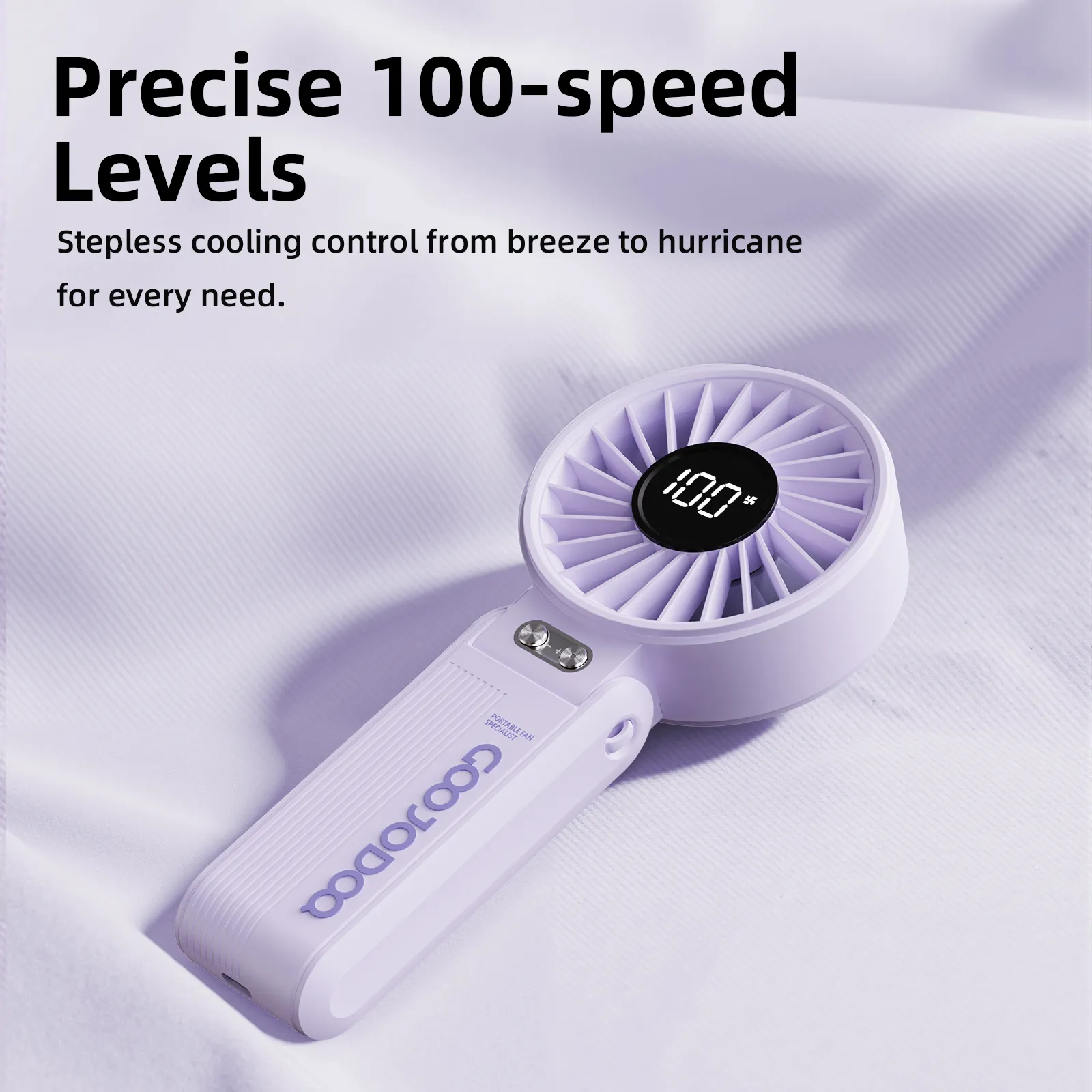
Power is nothing without control. A fan that only has one “On” setting is like a car with no accelerator—it’s not very practical. The ability to adjust the fan speed is crucial for both comfort and battery management.
Why More is Better
Having multiple speed options (typically low, medium, and high) allows you to adapt to any situation. We’ve all been there: you come inside from the scorching noontime heat and need that maximum “turbo” blast immediately. But an hour later, sitting at your desk, you just need a gentle, silent breeze.
The Strategic Advantage in a Brownout
This is where speed settings become a survival tool. During an unexpected brownout, your first instinct might be to crank the fan to high. However, dropping it to the low or medium setting can dramatically extend the battery life, often doubling or even tripling its runtime. It’s the smart way to ensure you have cool air for as long as possible.
The Sound of Silence: Noise Level (Decibels)
Imagine this: the power goes out, it’s dead silent, and you turn on your fan only to be met with a loud, irritating whirring sound. A fan’s noise level, measured in decibels (dB), can be the difference between peaceful comfort and a noisy headache.
- Understanding Decibels: For context, a quiet library is about 30-40dB. A normal conversation is around 60dB. A fan that operates above 50dB can be very distracting if you’re trying to work, and downright impossible to sleep with for light sleepers.
- Turbo Doesn’t Have to Mean Loud: A common misconception is that a powerful “turbo” fan must be loud. In 2025, modern engineering has changed the game. Efficient blade design and quality brushless motors allow many turbo fans to move a significant amount of air with surprisingly little noise, especially on their lower settings. Look for models that specifically advertise “quiet operation” or list their dB rating, aiming for something under 40dB for your go-to sleep setting.
Powering Up: The Modern Charging Method
How you charge your fan is a bigger deal than you might think. It directly impacts convenience and how “future-proof” your device is. In today’s tech landscape, there’s one clear winner.
Embrace USB-C
While older models might still use the clunky, one-way Micro-USB port, the modern standard is USB-C. Here’s why it’s a non-negotiable feature in 2025:
- Universal Compatibility: It’s the same port used by most new smartphones, tablets, and even laptops. This means you need fewer cables in your life. One cable can charge them all.
- Reversible Connector: No more fumbling in the dark during a brownout trying to figure out which way the plug goes in. USB-C plugs in correctly the first time, every time.
- Faster Charging: USB-C ports often support faster charging speeds, meaning your fan gets back to full power more quickly.
This universal charging capability means you can power up your fan from a wall adapter, a power bank, your laptop, or a car charger, giving you ultimate flexibility whether you’re at home or on the go.
Peace of Mind: Crucial Safety Features
Last but certainly not least, safety should always be a priority, especially in a household with children or pets. A well-designed fan includes features to prevent accidents.
The Fan Guard
The most important safety feature is the protective grille or guard covering the blades. The gaps should be narrow enough to prevent small, curious fingers (or paws and tails) from getting through. It’s a simple feature that provides essential peace of mind.
Stability and Durability
Look for a fan with a sturdy, wide, or non-slip base. The last thing you want is for it to be easily knocked over, especially when it’s running on your desk next to a drink or important papers. Additionally, some premium models include battery protection circuits to prevent overcharging or overheating, which not only enhances safety but also prolongs the life of the battery itself.

Conclusion: A Smarter Way to Stay Cool
So, let’s circle back to that initial question. When the heat is so intense you can only say “Grabe!”, and the familiar dread of a sudden brownout looms, is a small gadget really the answer? After exploring what makes these compact powerhouses tick, the answer is a clear and resounding yes. The rechargeable small turbo fan isn’t just another item to clutter your desk; it’s a modern-day survival tool crafted for the realities of life in the Philippines.
More Than Just a Fan: Your All-in-One Comfort Solution
We’ve broken down the technology and the practical benefits, but it all boils down to three core advantages that directly address the daily challenges we face. Think of it as your personal shield against the elements and unpredictability.
- Potent, Personal Cooling: Forget those weak fans that barely move the humid air around. A turbo fan’s focused, high-pressure airstream provides an immediate and satisfying cooling sensation, cutting through the thickest “kulob” feeling. It’s the difference between merely enduring the heat and actively conquering it in your personal space.
- The Ultimate Brownout “Diskarte”: This is the game-changer. A rechargeable battery transforms this device from a simple fan into an essential piece of preparedness gear. It means uninterrupted sleep, the ability to continue working from home, and a safe source of comfort for kids or the elderly when the grid fails. It’s peace of mind, powered by a USB port.
- Unmatched Portability and Freedom: Its small size is its superpower. It’s not chained to a wall socket, giving you the freedom to bring your comfort with you. From the kitchen while cooking your adobo, to your bedside table, to your office cubicle, and even in your car during a traffic jam on EDSA—it’s your personal breeze on demand.
An Investment in Your Sanity and Productivity
Let’s be honest. In 2025, with many of us still in hybrid or full work-from-home setups, comfort is directly linked to productivity. How many brilliant ideas have been lost to the brain-fog of an unbearably hot afternoon? How much focus has been shattered by the sudden, sweaty silence of a power cut?
Beyond a Simple Purchase
Viewing a rechargeable turbo fan as a simple expense is missing the bigger picture. It’s a small investment in your well-being and your output. It’s a tool that helps you maintain focus during a critical video call. It’s the quiet hum that allows you to get a full night’s rest, so you wake up refreshed instead of drained and irritable. In a climate that constantly tests our patience, this device helps you reclaim a sense of control and stability.
When you weigh the cost against the hours of lost productivity, disrupted sleep, and general discomfort, the value proposition becomes incredibly clear. It’s a far more energy-efficient and practical solution for personal cooling than running a full-sized air conditioner, especially when you only need to cool yourself, not the entire room.
Take Charge of Your Comfort
Living in the tropics is a beautiful thing, but it demands a certain level of resilience and cleverness. The days of simply “tiis-tiis lang” (just enduring it) are over. We now have smart, accessible technology designed to make our lives genuinely better and more comfortable.
So, the next time the sweltering heat has you pinned down, or the lights flicker and die, you don’t have to be at their mercy. A rechargeable small turbo fan is more than just a piece of plastic and a battery; it’s your personal declaration of independence from the heat and the brownouts. It’s about taking control, staying cool, and remaining productive, no matter what the day throws at you.

Sale
- 3-Month Extended Replacement Plan
GOOJODOQ Portable Fans High-Speed GFS006
Original price was: ₱869.00.₱830.00Current price is: ₱830.00. Select options This product has multiple variants. The options may be chosen on the product pageSale
- 3-Month Extended Replacement Plan
GOOJODOQ High Speed Handheld Fan GFS001
Original price was: ₱827.40.₱680.00Current price is: ₱680.00. Select options This product has multiple variants. The options may be chosen on the product pageSale
- 3-Month Extended Replacement Plan
GOOJODOQ High Speed Mini Fan GFS007
Price range: ₱520.00 through ₱580.00 Select options This product has multiple variants. The options may be chosen on the product pageSale
- 3-Month Extended Replacement Plan
GOOJODOQ Foldable Portable Fan GFS003
Original price was: ₱523.95.₱489.00Current price is: ₱489.00. Select options This product has multiple variants. The options may be chosen on the product page
09Apr


 29Apr
29Apr
 30Apr
30Apr