







 09Apr
09Apr
Introduction: Beating the Philippine Heat, One Breeze at a Time
You know the feeling. It’s that familiar, sticky embrace of the tropical heat that greets you the moment you step outside. It’s the wave of warmth that hits you inside a jam-packed jeepney crawling through EDSA traffic. It’s the sudden, stifling silence when a brownout strikes, turning your room into a personal sauna right before a crucial online meeting.
This isn’t just a weather report; it’s the daily reality for millions of Filipinos. For us, staying cool isn’t a luxury—it’s a constant, tactical battle.
More Than a Gadget: The Pinoy’s Everyday Lifesaver
In this relentless heat, the humble mini electric fan has evolved from a simple accessory into an indispensable part of our daily survival kit. It’s no longer just about comfort. It’s about maintaining focus during a work-from-home shift, getting a few minutes of relief on a sweltering commute, or ensuring a baby can sleep soundly through a hot afternoon.
The demand is simple: we need a personal cooling solution that is portable enough to go wherever we go, powerful enough to make a difference, and affordable enough for the everyday Filipino budget. It has to be a real workhorse, ready for action at a moment’s notice.
Your 2025 Playbook for Finding the Perfect Fan
But here’s the challenge: the market is flooded with options. Do you brave the bustling alleys of Divisoria to haggle for a bargain, testing the “lakas ng hangin” yourself? Or do you dive into the endless scroll of Lazada and Shopee, navigating thousands of listings, questionable reviews, and flash sales?
What really makes a mini fan “good” in 2025? Are we still looking at the same old features, or are there new technologies to consider? This is where this guide comes in. We are cutting through the noise to give you the ultimate resource for choosing the perfect mini electric fan this year. We’ll break down exactly what to look for, the different types you’ll encounter, and help you decide where to find the best deals. It’s time to make an informed choice and find your perfect, portable breeze.
.webp)
Understanding Your Needs: Why Do You Need a Mini Fan?
Before you even think about colors or brands, the first step is to be honest about your lifestyle. A mini electric fan isn’t just a gadget; it’s a daily survival tool in the Philippines. The fan that’s perfect for your cousin who works from home might be completely useless for your daily commute. Identifying your primary need is the most crucial step in finding the right one.
So, let’s break it down. Think of yourself as one of these four common Pinoy personas. Which one sounds the most like you?
The Commuter’s Companion
If your daily life involves battling the heat inside a jeepney, waiting in line for the MRT, or being stuck in EDSA traffic, then your mini fan is your personal, portable air-conditioner. This is your weapon against the sweltering, shared space of public transport.
For you, two things are non-negotiable: portability and battery life. The fan must be lightweight and compact enough to slip into your tote bag or backpack without feeling like you’re carrying a brick. You’re already carrying your lunch, your tumbler, and an umbrella—the fan shouldn’t add to the burden.
Battery life is your lifeline. You need a fan that can survive your entire journey, from your doorstep to the office and all the way back home. The last thing you want is for your only source of cool air to die just as the bus gets stuck in an unexpected traffic jam on a Friday afternoon.
The Brownout Savior
Ah, the dreaded, unscheduled brownout. One moment you’re enjoying your favorite series, the next, you’re plunged into darkness and a fast-rising, humid heat. For those who know this struggle all too well, a mini fan is more than a convenience—it’s an essential part of your emergency kit.
Your main focus should be maximum battery longevity. We’re not talking about a fan that lasts for two or three hours. You need a workhorse that can run through the night, providing a gentle breeze that makes it possible to sleep through the stuffiness. Look for models that boast an 8-hour, 10-hour, or even longer runtime on a single charge.
A brilliant secondary feature to look for is a built-in LED light. In 2025, many models have integrated this, turning your fan into a 2-in-1 survival tool. It provides not just relief from the heat but also a source of light, making those long brownout hours far more bearable.
The Desk Jockey’s Friend
Whether you’re in a bustling open-plan office or at your work-from-home station, your personal climate control is key to productivity. A standard electric fan might be too powerful, blowing papers everywhere and bothering your colleagues. Your mini fan needs to be effective but discreet.
Noise level is your primary concern. The gentle hum of a fan can be relaxing, but a loud, rattling motor is a major distraction, especially during video calls or when you’re trying to concentrate. Search for models that are specifically marketed as “quiet” or “low-noise,” often those with brushless motors.
Stability and form factor are also important. A fan with a solid, non-slip base is perfect for your desk. Alternatively, a clip-on fan can be a fantastic space-saver, allowing you to attach it to a shelf, your monitor stand, or the edge of your table, directing the airflow exactly where you need it without taking up valuable real estate.
The Outdoor Adventurer
For the Pinoy who loves a weekend getaway to the beach, a family picnic at the park, or camping with friends, your mini fan needs to be as tough and ready for action as you are. This isn’t for a controlled indoor environment; this is for battling the elements.
Your priorities are durability and raw power. The fan should be made from sturdy materials that can handle being tossed in a bag, getting a little sand on it, and surviving the general chaos of an outdoor trip. A flimsy, delicate fan simply won’t last.
Most importantly, you need strong wind power. You’re not just cooling yourself in a still room; you’re competing with the open air and the blazing sun. You need a fan with blades and a motor designed to produce a focused, powerful gust of wind that you can actually feel, providing instant relief during those peak-heat hours of your adventure.
Decoding the Tech: Key Features to Look for in 2025
Walk down any aisle in Divisoria or scroll through a dozen listings on Lazada, and you’ll see hundreds of mini electric fans that look almost identical. But underneath the colorful plastic, the technology inside makes all the difference between a fan that dies mid-commute and one that becomes your trusty sidekick. In 2025, the tech has gotten smarter, more efficient, and tailored to the Pinoy lifestyle. Let’s break down exactly what you need to look for.
Battery Life & Charging: The Heart of Your Fan’s “Buhay”
Forget the wind speed for a second. The single most important feature of a portable fan is its battery. This is its “buhay,” its life force. A fan with a weak battery is useless when you need it most—like during that three-hour standstill traffic on EDSA or when Meralco decides to have an “unscheduled power interruption.”
Understanding mAh: Your Fan’s Gas Tank
You’ll see a number followed by “mAh” (milliampere-hours) in the product specs. Think of this as the size of your fan’s fuel tank. The bigger the number, the longer it will run before needing a recharge.
- 1500-2500mAh: This is the basic level. Expect it to last 2-4 hours on the lowest setting. It’s enough for a one-way trip from your home to the office, but you’ll need to charge it daily.
- 3000-5000mAh: This is the 2025 sweet spot for most people. A fan in this range can provide a whole day of intermittent use or survive a long brownout, running for 5-10 hours on a low setting.
- 6000mAh and above: This is heavy-duty territory. These are the powerhouses that can last for more than a full day. They are perfect for overnight trips, all-day outdoor events, or for those who simply hate charging their devices.
The USB-C Revolution is Here
If a mini fan in 2025 is still using a micro-USB port, walk away. It’s a sign of outdated technology. The standard is now USB-C, and for good reason. It means you can use the same charger as your modern smartphone, laptop, or tablet. No more carrying a tangled mess of different cables!
USB-C offers faster charging speeds, getting your fan back in action quicker. Plus, the connector is reversible, so you won’t be fumbling in the dark to plug it in during a power outage.
More Than a Fan: The Power Bank Feature
Some of the smartest mini fans now double as a power bank. They have a standard USB-A port that lets you charge your phone or other gadgets. This 2-in-1 functionality is a lifesaver. Imagine your phone hitting 5% while you’re waiting for your Grab. Your fan can give it enough juice to last until you get home. It’s the ultimate “dalawang-in-one” gadget for any prepared Pinoy.
Motor & Blade Design: The Science of “Hangin”
The strength and quality of the breeze (“hangin”) depend on what’s inside. The motor and the design of the blades are the engine and propellers of your personal cooling system.
Look for models that specifically mention a brushless DC motor. This is a major upgrade from the older, cheaper brushed motors. Brushless motors are significantly quieter, more energy-efficient (meaning your battery lasts longer), and have a much longer lifespan because there are fewer parts that wear out.
The blades also play a huge role. It’s not just about the number of blades. The shape, curve, and angle determine the airflow.
- 3 to 4 Large, Curved Blades: This design typically pushes a powerful, concentrated gust of wind. It’s great for instant relief when you’ve just come in from the scorching sun. The downside is that it can be a bit noisier.
- 5 to 7 Smaller, Thinner Blades: This setup produces a softer, wider, and often quieter airflow. It feels more like a natural breeze and is perfect for keeping on your desk while you work or on your bedside table while you sleep without being disruptive.
Speed Settings & Noise Level: Control Your Cool
A single-speed fan is a thing of the past. Life in the Philippines requires flexibility. You need a gentle breeze for a stuffy room at night, but a powerful blast for a humid afternoon in a crowded market. Look for a fan with at least three speed settings: Low, Medium, and High.
Think of them this way:
- Low (“Mahina”): The “pabulong” or whisper mode. Ideal for sleeping, quiet offices, or libraries where you don’t want to disturb others.
- Medium (“Katamtaman”): Your everyday workhorse. Perfect for your WFH desk or for a bit of comfort while eating lunch.
- High (“Malakas”): Your emergency turbo button. This is for when the heat is unbearable, for quick cool-downs after a workout, or for creating some airflow in a room during a brownout.
As for noise, some manufacturers now list a decibel (dB) rating. For context, a quiet library is about 40 dB. A top-tier mini fan in 2025 can operate at under 35 dB on its lowest setting. If you’re sensitive to noise, this is a spec worth looking for.
Build Quality & Portability: Will It Survive Your Daily “Buhay”?
A mini fan needs to be tough. It has to survive being jammed into a backpack, rattling around in a jeepney, and maybe even the occasional accidental drop. This is where build quality, or “tibay,” comes in.
Most fans are made of plastic, but not all plastics are equal. Look for fans made from ABS (Acrylonitrile Butadiene Styrene) plastic. It’s more durable and resistant to impact than the cheap, flimsy plastic found in bargain-bin models. If you’re buying in a physical store like Divisoria, hold the fan. Does it feel solid or does it creak when you squeeze it?
Portability isn’t just about size. It’s about smart design.
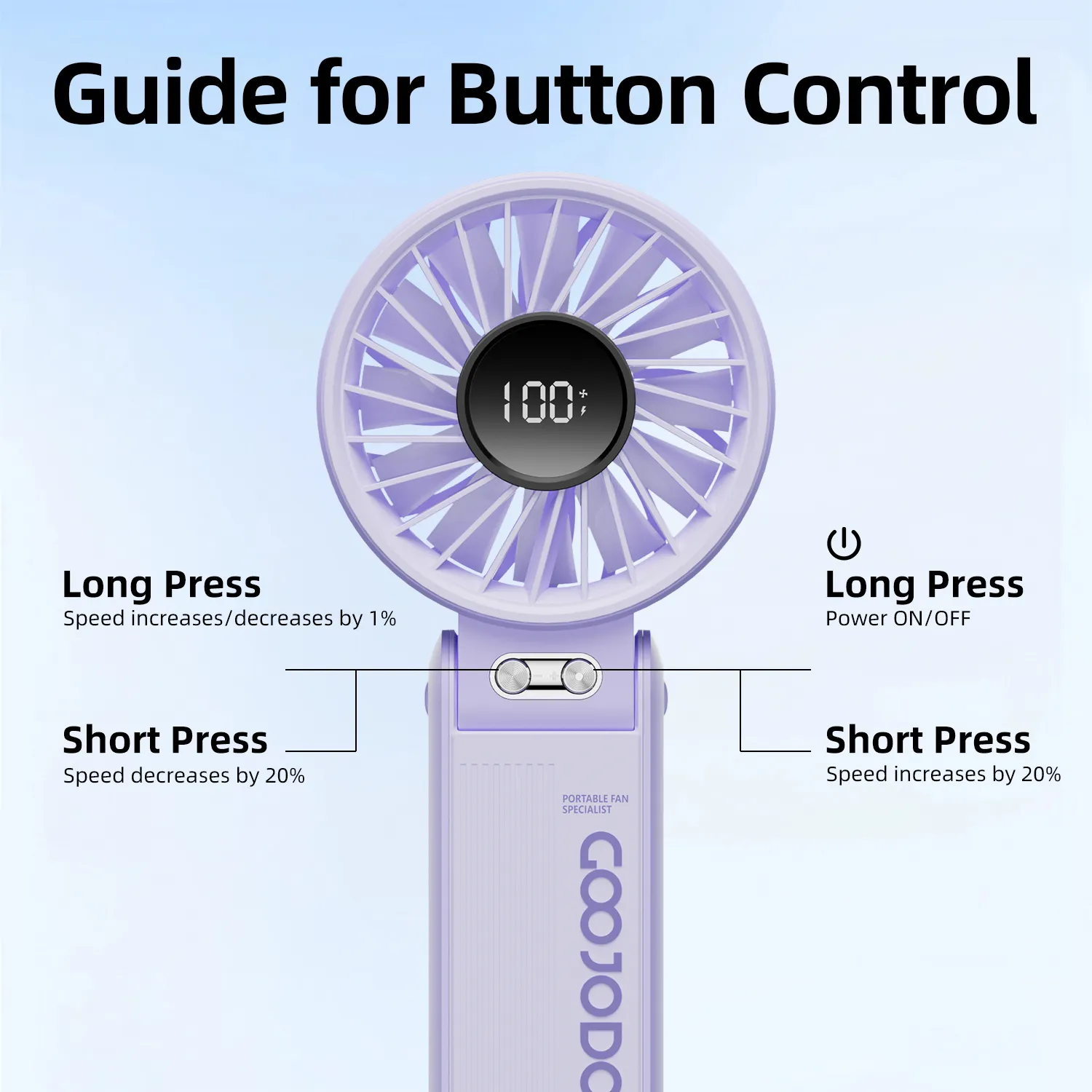
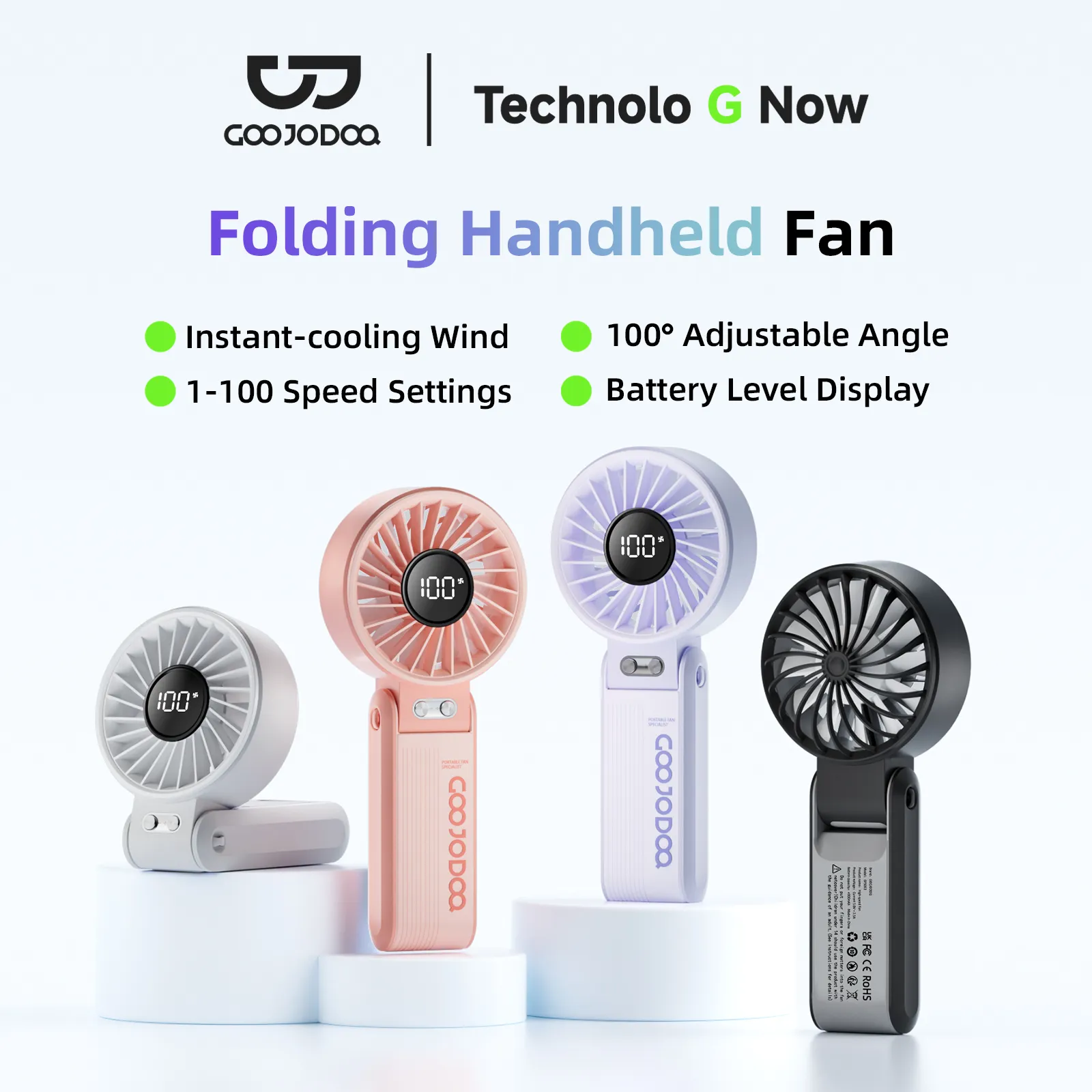
Foldable Handles
A fan that can fold into a compact shape is much easier to slip into a small bag or pocket. Some designs allow the handle to fold and become a stable base, instantly converting it from a handheld to a desk fan.
Stable Bases & Clips
If you plan to use it on a table, make sure the base is wide and has non-slip rubber feet. For maximum versatility, a clip-on fan is fantastic. You can attach it to your baby’s stroller, your laptop screen, a bookshelf, or the headboard of your bed.
The “Pang-Flex” Features of 2025
Beyond the basics, 2025 has brought some cool, intelligent features that were once reserved for high-end appliances. These are the details that elevate a simple fan into a modern, must-have gadget.
Digital Battery Percentage Display
This is a game-changer. Instead of a few blinking lights that leave you guessing, a clear digital display shows you the exact battery percentage remaining. You’ll know precisely when it’s time to charge, ensuring you’re never caught off guard.
Misting Function
On the most brutal, humid days, sometimes a simple breeze isn’t enough. Misting fans have a small water reservoir and a nozzle that sprays an ultra-fine mist into the airflow. As the mist evaporates on your skin, it creates a powerful cooling effect, like having your own personal air conditioner. Just be sure to use clean water to keep the nozzle from clogging!
Integrated LED Lights
Many fans now come with a built-in LED light. This multi-purpose feature makes your fan an indispensable tool during a brownout, serving as both your source of cooling and your emergency light. It’s also handy as a small lamp for reading or as a night light.
Types of Mini Electric Fans on the Market
Walk into any mall, browse through Lazada, or brave the crowds in Divisoria, and you’ll see a dizzying array of mini electric fans. They’re not all built the same, and the best one for you depends entirely on your daily grind. Choosing the right type is the first, most crucial step. It’s the difference between a handy gadget and a piece of plastic that just gathers dust.
Let’s break down the main contenders you’ll find in the 2025 Pinoy market, so you can pick your champion in the fight against the heat.
1. The Classic Commuter: Handheld Fans
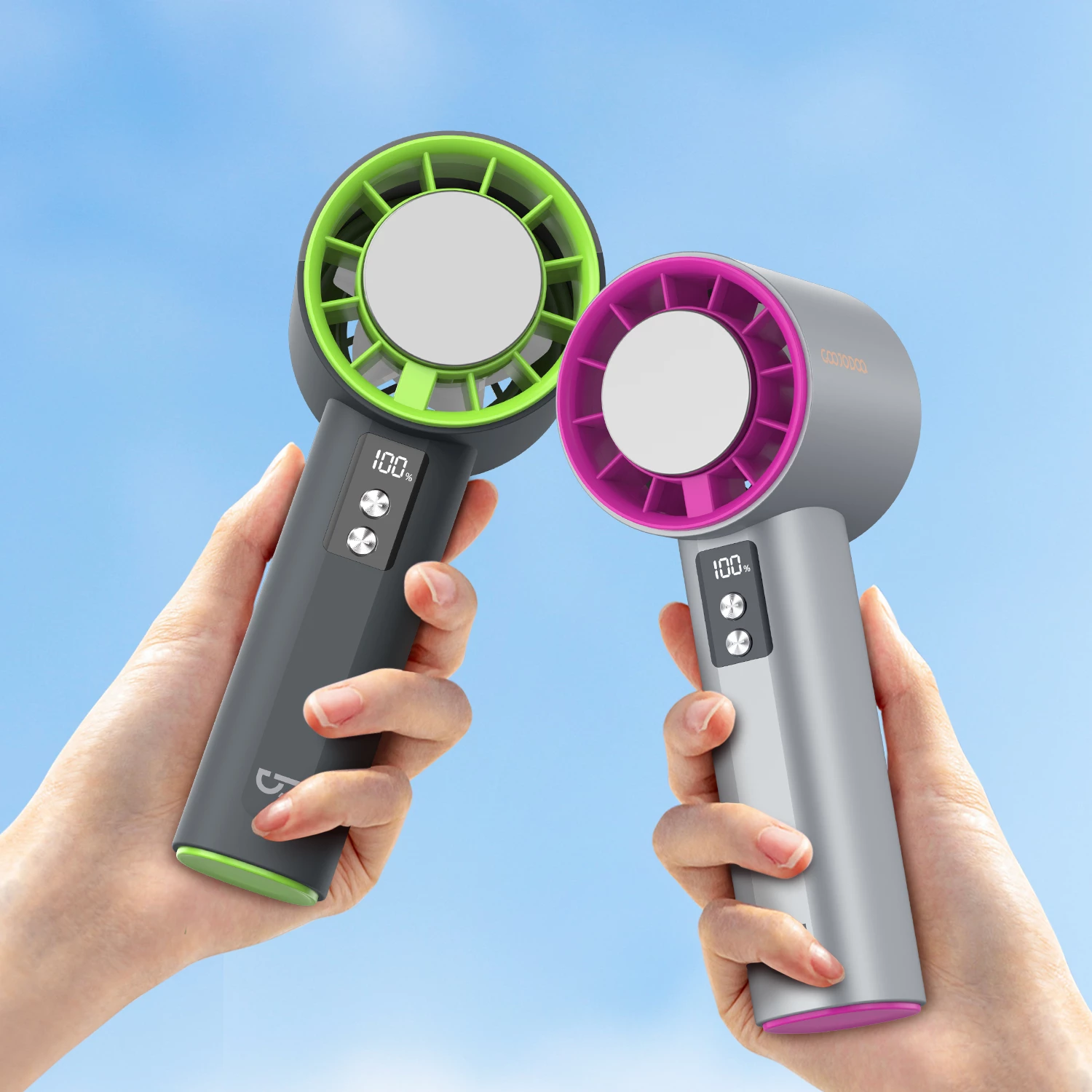
This is the OG, the one that started it all. When you think “mini fan,” this is likely what pops into your head. It’s the quintessential portable cooling device, designed for one simple purpose: to give you a direct, personal breeze whenever and wherever you need it.
Who is it for?
We’ve all been there—packed like sardines in a jeepney at 2 PM, waiting in a long line for the UV Express, or walking under the scorching sun to the next office building. This is the handheld fan’s natural habitat. It’s for the daily commuter, the student, the errand-runner. It’s the “I need relief right now” solution.
What to Consider:
- Pros: The most portable and lightweight option. They are simple to use, affordable, and readily available everywhere, from 7-Eleven to high-end gadget stores.
- Cons: You have to physically hold it, which can be a hassle if you’re carrying other things. The airflow is very focused and usually the weakest among all types. Battery life can be a mixed bag, especially with cheaper, unbranded models.
2025 Trend Watch: Look for models that come with a small, detachable base. This simple addition instantly gives it a dual purpose, allowing it to stand on a table when you’re not on the move. A built-in wrist strap is also a small but incredibly useful feature to prevent accidental drops.
2. The Work-from-Home Staple: Desk Fans
As more Filipinos embrace remote or hybrid work, the personal desk fan has become a non-negotiable part of the WFH setup. These are small, stationary fans designed to sit on a flat surface and provide a consistent, cooling airflow without taking up too much real estate.
Who is it for?
This is for the desk jockeys, the freelancers, the call center agents, and anyone who spends hours at a desk. It’s for keeping your cool during a Zoom meeting or while trying to beat a deadline, especially in a room where the main air conditioner is just too far away. It’s also perfect as a bedside companion for a gentle breeze through the night.
What to Consider:
- Pros: They offer a more stable and often more powerful breeze than handheld models. Many can be powered directly via a USB port on your laptop or power bank, saving the battery for when you really need it. They’re also generally quieter, a huge plus for maintaining focus.
- Cons: Their main drawback is their complete lack of portability. They are designed to stay in one place.
2025 Trend Watch: Miniaturization of technology means you can now find small desk fans with an oscillation feature, allowing them to cool a wider area. Also, premium models now feature ultra-quiet brushless motors that are almost silent on the lowest setting.
3. The Space-Saving Multitasker: Clip-on Fans
What if you don’t have desk space to spare? Enter the clip-on fan. This ingenious design features a strong clamp or clip as its base, allowing you to attach it to almost any surface—a shelf, a headboard, your cubicle wall, or even your baby’s stroller.
Who is it for?
This is for the “praktikal” Pinoy who needs cooling in unconventional spaces. Think students living in a dormitory with a double-deck bed, parents wanting to keep their baby cool on a walk, or someone who wants a fan in their kitchen while cooking. It’s the ultimate space-saver.
What to Consider:
- Pros: Incredibly versatile placement. It keeps surfaces clear and allows for perfect directional airflow. The “neck” is usually highly flexible, letting you point the breeze exactly where you want it.
- Cons: The quality of the clip is everything. A weak clip can be a safety hazard or just plain annoying. They can also be a bit bulkier and heavier than other types to accommodate the clamping mechanism.
2025 Trend Watch: Manufacturers are focusing on stronger, rubber-padded clamps that grip securely without damaging furniture. More models now boast a full 360-degree rotation, giving you complete control over the airflow’s direction.
4. The Hands-Free Future: Neck Fans
Once looking like a futuristic gadget from a sci-fi movie, the neck fan has now become a common sight, and for good reason. Worn like a pair of headphones, this device offers the holy grail of personal cooling: a hands-free experience.
Who is it for?
This is for the active individual. Someone gardening, biking, attending an outdoor concert, or simply doing groceries at a weekend market. It provides a constant, upward breeze to your neck and face, which is surprisingly effective at cooling you down. For anyone who needs to keep their hands free while staying cool, this is the game-changer.
What to Consider:
- Pros: The freedom of being hands-free is its biggest selling point. It provides a more immersive cooling experience by targeting the neck and face directly.
- Cons: Battery life is a major factor, as they need to power multiple small fans. Cheaper models can be noisy and feel heavy or bulky around the neck after prolonged use. There’s also the “looks” factor—some people might feel self-conscious wearing one.
2025 Trend Watch: The biggest innovation is the widespread adoption of bladeless designs. These use internal turbines to push air out through small vents, making them safer (no risk of tangling hair) and often sleeker in appearance. Lighter materials and more ergonomic, comfortable designs are also becoming standard.
5. The Best of Both Worlds: Foldable/Multi-way Fans
Why choose one when you can have two? The foldable fan is the clever hybrid that combines the portability of a handheld fan with the stability of a desk fan. The handle is designed to bend or fold, transforming it into a sturdy base.
Who is it for?
This is for the jack-of-all-trades, the budget-conscious student, or the minimalist who wants one gadget for multiple scenarios. Use it while walking to a coffee shop, and once you get your table, simply fold the handle and set it down to continue enjoying the breeze while you work or chat with friends.
What to Consider:
- Pros: Excellent value and versatility. You get two form factors for the price of one, making it an incredibly practical choice for varied daily routines.
- Cons: The hinge mechanism is a potential point of failure. On poorly made models, this can become loose over time, making it unstable as a desk fan. It might be slightly bulkier than a dedicated handheld fan.
2025 Trend Watch: Designers are getting more creative with the base. Some foldable fans now incorporate a small slot in the base, turning it into a functional phone holder. This is perfect for watching videos or joining online calls while staying cool—a truly modern, multi-tasking device.

Where to Buy: The Great Debate of Divisoria vs. Online Shopping
So, you’ve figured out exactly what you need in a mini electric fan. The next big question is a classic Pinoy dilemma: Do you brave the bustling crowds of Divisoria for a bargain, or do you scroll endlessly through Lazada and Shopee from the comfort of your home? In 2025, both avenues have their distinct advantages and pitfalls. The right choice depends entirely on what you value most: immediate results and a hands-on experience, or a world of options and buyer protection.
Let’s break down this modern-day shopping showdown to help you decide where to spend your hard-earned pesos.
The Classic Hunt: Braving Physical Markets like Divisoria and Local Tiangge
There’s an undeniable charm and energy to shopping in places like Divisoria, Greenhills, or your local neighborhood tiangge. It’s a multi-sensory experience—the calls of the vendors, the smell of street food, and the thrill of finding a hidden gem. This is the traditional way, and for many, it’s still the best way.
The Pros: The Thrill of the In-Person Find
-
Feel the Breeze First-Hand (“Testing the Hangin”)
This is, without a doubt, the biggest advantage of physical shopping. You get to hold the fan, feel its weight, and most importantly, turn it on. You can directly test the wind strength—the “hangin”—at all its speed settings. Is level one a gentle whisper or barely there? Is level three a powerful gust or just a noisy disappointment? This immediate, tangible feedback is something no online product description can replicate.
-
No Shipping Fees, Instant Gratification
You see it, you test it, you buy it, you use it on the jeepney ride home. It’s that simple. There’s no waiting for a package to be packed, shipped, and delivered. In the sweltering Philippine heat, when you need a fan, you often need it *now*. Walking away with your purchase in hand provides an instant solution to your cooling problem.
-
The Art of Haggling (“Tawad”)
For the savvy shopper, the price tag is just a suggestion. Engaging in a friendly haggle, or “tawad,” is part of the culture and can lead to significant savings, especially if you’re buying more than one item. Building a little rapport with the “tindera” or “tindero” can get you a final price that feels like a personal victory, something you’ll never experience clicking a “Place Order” button.
The Cons: The Realities of the Tiangge Trek
-
Warranty? What Warranty?
This is the most significant risk. In most informal markets, transactions are final. Once you walk away, the deal is done. If the fan stops working a week later, or even the next day, you have very little recourse. You might get a “7-day replacement” promise, but that requires another trip back, with no guarantee the vendor will honor it.
-
The “Pamasahe” and Time Cost
A trip to a major market like Divisoria isn’t free. You have to factor in transportation costs (pamasahe), the energy spent navigating dense crowds under the hot sun, and the time you could have spent doing something else. That “cheap” fan might not be so cheap once you add up all the incidental expenses.
-
A Gamble on Selection and Quality
While the stalls seem endless, the actual variety of models can be surprisingly limited. Vendors often carry the same few trending, unbranded models. You’re less likely to find fans with specific features like brushless motors or USB-C charging. Quality is also a major variable; you’re often dealing with OEM products with no brand reputation to uphold.
The Digital Cart: Shopping from Your Couch on Lazada & Shopee
The rise of e-commerce has fundamentally changed how Filipinos shop. Online platforms offer a universe of products at your fingertips, transforming the search for a mini fan from a physical trek into a digital quest.
The Pros: The Power of Infinite Scroll
-
A Universe of Choices
This is where online platforms are unbeatable. You can browse hundreds, if not thousands, of different mini fan models. From neck fans to clip-on fans, from those with misting functions to ones that double as a power bank, the selection is immense. You can filter by brand, price, features, and even seller location, allowing you to find the exact fan that meets your specific needs.
-
Community-Powered Decisions: The Power of Reviews
Can’t test the “hangin”? The next best thing is reading reviews from hundreds of fellow Pinoys who already have. User reviews, complete with photos and videos, are an invaluable resource. You can find out about the real battery life, the actual noise level, and the long-term durability from people who have put the fan to the test in real-world Filipino conditions. This collective experience helps you avoid “budol” finds.
-
Warranties and Buyer Protection
Shopping from official brand stores (like a “LazMall” or “Shopee Mall” flagship) provides a layer of security that physical markets can’t match. You get official warranties, clear return policies, and a customer service channel to turn to if the product is defective. This peace of mind is often worth paying a little extra for.
-
The Convenience Factor is Unbeatable
Shopping at 2 AM in your pajamas? No problem. Having a fan delivered directly to your provincial address? Easy. The sheer convenience of ordering from home, avoiding traffic, and saving time and energy is a massive advantage in our busy modern lives. Plus, you can easily wait for big monthly sales like 11.11 or Payday Sales to get the best possible price.
The Cons: The “Add to Cart” Caveats
-
You Can’t Test It Before You Trust It
This is the flip side of the coin. You are buying based on pictures, descriptions, and other people’s opinions. You won’t know how strong the airflow really is or how cheap the plastic feels until it arrives at your doorstep. Sometimes, a product that looks great online can be a major disappointment in person.
-
The Return and Refund Hassle
While buyer protection exists, the process of returning a defective item can be a chore. It involves printing labels, packing the item back up, and dropping it off at a courier center. It can take weeks to get a refund or replacement, which is frustrating when you’re left without a fan in the meantime.
-
The Waiting Game (and Shipping Fees)
Patience is a virtue in online shopping. Depending on the seller’s location and the courier’s efficiency, you could be waiting anywhere from a few days to over a week for your fan to arrive. You also need to be mindful of shipping fees, which can sometimes negate the low price of the item itself, though many sellers offer free shipping vouchers.
Maintenance and Safety Tips to Make Your Fan Last
You’ve done it. You’ve found a mini electric fan that promises to be your personal lifesaver against the sweltering Philippine heat. But here’s a reality check: a fan, especially one bought from a bustling market like Divisoria, is only as good as how you care for it. To prevent it from giving up on you during a critical brownout or a humid commute, you need to give it some proper TLC. Think of it as an investment in your personal comfort; these tips will ensure you get the most out of every peso you spent.
Proper Charging Habits: The Lifeline of Your Fan
The single most common reason a portable fan dies an early death is its battery. We Pinoys often have a “charge it when you can” mentality, but a little bit of strategy goes a long way in preserving the heart of your device.
Avoid the “Overnight” Charging Trap
The most important rule is to avoid overcharging. While modern devices in 2025 have better protection circuits, many budget-friendly mini fans cut corners on this feature. Leaving your fan plugged in overnight, every night, puts unnecessary stress on its lithium-ion battery. This generates heat and can degrade the battery’s capacity to hold a full charge over time.
- The 20-80% Rule: If you really want to maximize its lifespan, try to keep the battery between 20% and 80%. It’s healthier for the battery chemistry than constantly draining it to 0% or charging it to a full 100%.
- Unplug When Full: Most fans have an indicator light that changes color (e.g., from red to green or blue) when fully charged. Once you see that light change, unplug it. Don’t leave it connected for hours on end.
Your Charger and Cable Matter More Than You Think
Not all chargers are created equal. Using a random charger you found in a drawer could be slowly killing your fan.
Always try to use the cable that came with your fan. If you lose it, replace it with a quality cable. The same goes for the power adapter. A cheap, uncertified charger from a tiangge might provide unstable voltage, which can damage the fan’s delicate charging circuit. It’s a fire hazard waiting to happen. For fans with modern USB-C ports, stick to reputable brands for your chargers.
Regular Cleaning: More Than Just for Looks
Let’s be honest, our homes get dusty. Whether it’s the city pollution in Manila or just the open-window nature of provincial life, dust is a constant battle. This dust doesn’t just make your fan look dirty; it kills its performance and can even be a health hazard.
A thick layer of grime on the blades unbalances them, causing more noise and motor strain. Clogged vents prevent proper airflow, making the motor work harder and overheat. You’re not just cleaning for aesthetics; you’re cleaning for efficiency and longevity.
Your Safe and Easy Cleaning Guide
Before you start, always make sure the fan is turned off and unplugged. Safety first, always!
- Wipe the Exterior: Use a soft, dry microfiber cloth to wipe down the body of the fan. For stubborn dirt, you can slightly dampen the cloth with water, but never spray liquid directly onto the fan.
- Clean the Grille: This is where the dust loves to hide. A dry, soft-bristled brush (an old, clean toothbrush works wonders) is perfect for getting into the grilles. You can also use cotton buds (Q-tips) to get into the tight spaces.
- Tackle the Blades: Some mini fans have a removable front grille. If yours does, carefully twist it off to get direct access to the blades. Wipe each blade clean with your cloth. If the grille is non-removable, use cotton buds or a pipe cleaner to reach through the slots and wipe the blades as best you can.
- Never Use Water on the Motor: This is a critical warning. Never let water or any liquid seep into the motor housing or charging port. This is the fastest way to short-circuit your device and render it useless or dangerous.
Safe Storage: For When the “Amihan” Season Arrives
During those few glorious, cooler months of the year, your mini fan might get a well-deserved break. Storing it properly ensures it will be ready to go when the heat inevitably returns.
Charge the battery to around 50% before storing it for a long period. A fully drained or fully charged battery is more prone to degradation when left unused. Keep it in a cool, dry place, away from direct sunlight—like a drawer or a cabinet, not on a windowsill. Placing it back in its original box, if you still have it, is the best option.
Checking for Authenticity: How to Spot a “Peke” Fan
In a marketplace filled with everything from original products to “Class A” knockoffs, knowing how to spot a fake can save you from a disappointing purchase, especially if you’re shopping in places like Divisoria or on less-regulated online seller pages.
A fake fan might look identical, but it almost certainly uses inferior batteries that won’t last, a noisy motor that will quickly burn out, and cheap plastic that can easily break.
Red Flags to Watch Out For
- Suspiciously Low Price: The number one rule of shopping: if the deal seems too good to be true, it probably is. A fan being sold for half the price of its listings on official online stores is a major red flag.
- Flimsy Build Quality: Feel the plastic. Does it feel brittle? Are there rough edges or seams that don’t line up perfectly? Authentic products generally have a more solid, well-finished feel. Give it a gentle shake; you shouldn’t hear excessive rattling.
- Spelling and Logo Errors: Examine the brand name and any text on the fan or its packaging. Counterfeiters often make small spelling mistakes (e.g., “Soni” instead of “Sony”). The logo might look slightly off in color or font.
- The “Hangin” Test: When buying in person, always ask to test the unit. Turn it on. Does the airflow (“hangin”) feel weak even on the highest setting? Is the motor unusually loud or making a grinding noise? These are signs of a cheap, inefficient motor.
- No Warranty or Vague Promises: A legitimate seller, especially from an official store on Lazada or Shopee, will offer a clear warranty period. A street vendor’s “7-day replacement” promise is often hard to claim. If there’s no mention of a warranty, be very cautious.
Conclusion: Finding Your Perfect Breeze
So, there you have it. Navigating the world of mini electric fans in the Philippines, from the vibrant chaos of Divisoria to the endless scroll of a Lazada feed, doesn’t have to be overwhelming. The perfect mini fan for you is out there, waiting to become your trusty sidekick against the relentless tropical heat.
At the end of the day, making the right choice boils down to a few simple, yet crucial, steps.
Your 2025 Mini Fan Buying Checklist
Before you click ‘add to cart’ or hand over your cash to a vendor in Greenhills, always run through this mental checklist. It’s your final line of defense against buyer’s remorse.
- Define Your “Why”: First and foremost, be honest about where you’ll use it most. Is this for your daily, sweat-inducing MRT commute? Is it a quiet companion for your work-from-home desk? Or is it your family’s designated savior during those dreaded Meralco brownouts? Your primary need is the compass that guides your entire decision.
- Look for Modern Essentials: It’s 2025. Don’t settle for old tech. Insist on USB-C charging for convenience and future-proofing. Look at the actual battery capacity (mAh) – don’t just trust vague promises of “long-lasting.” Features like a clear battery percentage display are no longer a luxury, but a practical necessity.
- Weigh Your Shopping Battleground: Decide if you’re a tactile shopper or a digital warrior. Do you crave the thrill of the “tawad” and the ability to personally test the “lakas ng hangin” in a physical store? Or do you prefer the convenience, vast selection, and crowdsourced wisdom of online reviews on platforms like Shopee and Lazada? Both have their clear pros and cons.
It’s Not About the Brand, It’s About Your “Buhay”
Let’s be real. It’s easy to get swayed by flashy marketing or what your favorite influencer is promoting. But the “best” mini electric fan isn’t the most expensive one or the one with the most RGB lights. It’s the one that seamlessly integrates into your daily Filipino life, your buhay.
The best fan is the one that’s still running on its last bar of battery when the power goes out mid-dinner. It’s the one that’s light enough to not make your tote bag feel like a sack of rocks on your way to the office. It’s the one quiet enough to not disturb your officemates, providing a discreet bubble of cool in an otherwise stuffy room. It’s a small investment in your personal comfort and sanity.
Go Find Your Cool, Kabayan!
You are now armed with all the knowledge you need to make a smart, informed decision. You understand the tech, you know the different types, and you know where to look. The power is, quite literally, in your hands.
So go forth and find that perfect pocket-sized breeze. Stay cool, stay comfortable, and conquer the heat. You’ve got this, Kabayan!
Sale
- 3-Month Extended Replacement Plan
GOOJODOQ Portable Fans High-Speed GFS006
Original price was: ₱869.00.₱830.00Current price is: ₱830.00. Select options This product has multiple variants. The options may be chosen on the product pageSale
- 3-Month Extended Replacement Plan
GOOJODOQ High Speed Handheld Fan GFS001
Original price was: ₱827.40.₱680.00Current price is: ₱680.00. Select options This product has multiple variants. The options may be chosen on the product pageSale
- 3-Month Extended Replacement Plan
GOOJODOQ High Speed Mini Fan GFS007
Price range: ₱520.00 through ₱580.00 Select options This product has multiple variants. The options may be chosen on the product pageSale
- 3-Month Extended Replacement Plan
GOOJODOQ Foldable Portable Fan GFS003
Original price was: ₱523.95.₱489.00Current price is: ₱489.00. Select options This product has multiple variants. The options may be chosen on the product page
09Apr


 29Apr
29Apr
 30Apr
30Apr